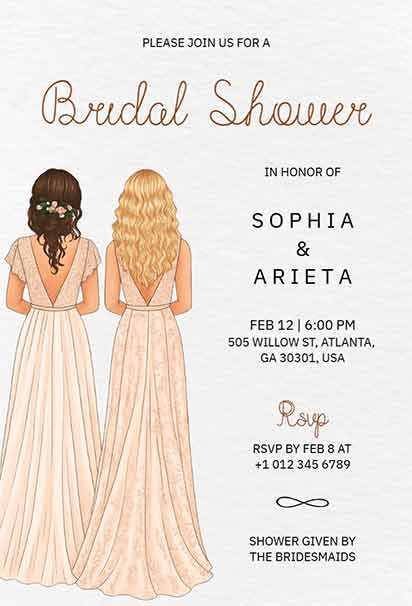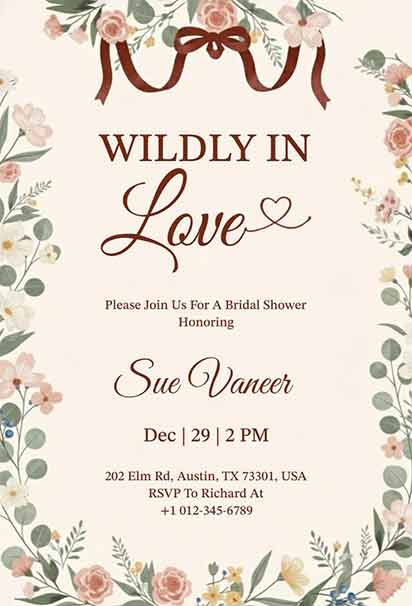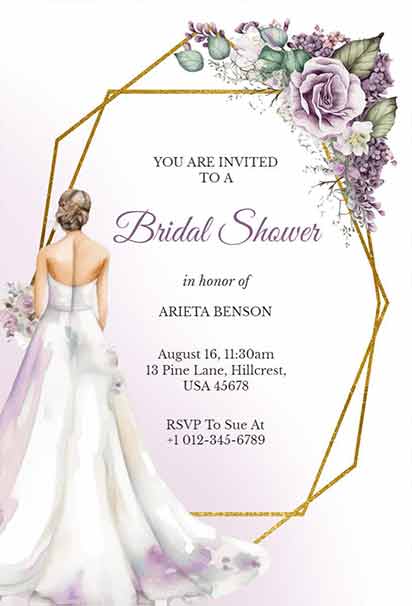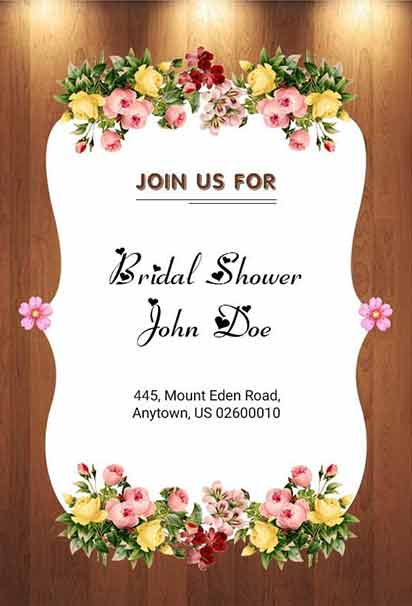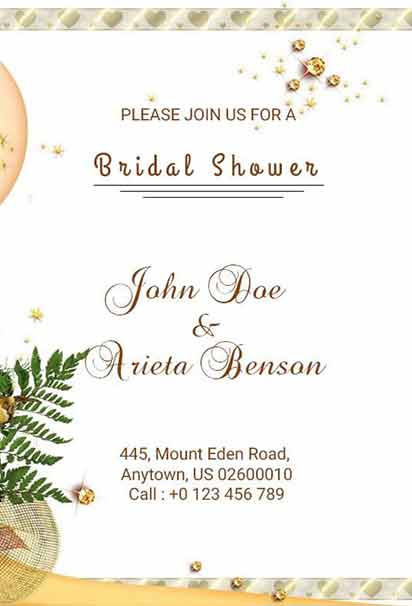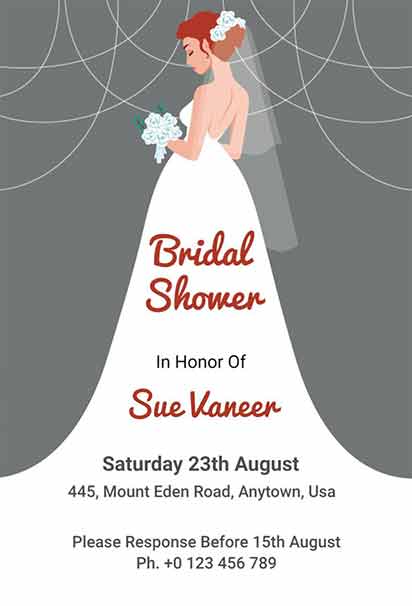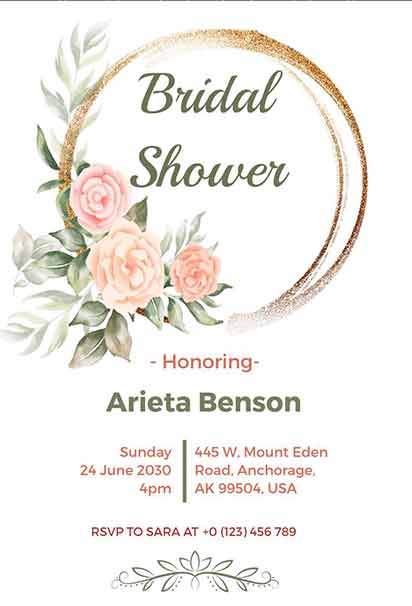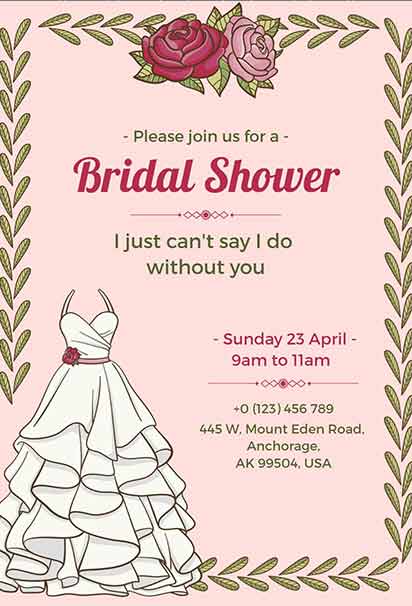
First impressions matter more than ever when it comes to bridal shower invitation designs. Your invitation serves as the opening act to what promises to be an unforgettable celebration, setting expectations and creating excitement among guests long before they arrive. The perfect bridal shower invitation design doesn’t just communicate essential event details – it captures the bride’s personality, reflects the celebration’s theme, and creates an emotional connection that makes recipients genuinely excited to attend.
Throughout this comprehensive guide, you’ll discover 25 stunning bridal shower invitation designs that consistently deliver results. We’ll explore everything from timeless, elegant bridal shower designs to cutting-edge digital bridal shower invitation templates, ensuring you find the perfect inspiration for your celebration. Each example showcases proven design principles while offering unique approaches to typography, color, and visual hierarchy that create lasting impressions.
What Makes a Bridal Shower Invitation Design Truly Captivating?
Creating captivating bridal shower invitation designs requires understanding the delicate balance between aesthetic appeal and functional communication. The most successful designs combine visual impact with clear information hierarchy, ensuring guests can quickly understand event details while feeling genuinely excited about the upcoming celebration.
Essential Design Elements That Create Impact
Effective bridal shower invitation designs rely on five fundamental elements that work together to create visual harmony and emotional connection. Visual hierarchy stands as the most critical component, guiding readers’ eyes through information in order of importance. The bride’s name should command primary attention, followed by the event type, date, time, and location details.
Balance creates stability and prevents designs from feeling overwhelming or chaotic. Symmetrical layouts offer traditional elegance, while asymmetrical arrangements can create dynamic energy that feels contemporary and fresh. The key lies in distributing visual weight evenly across the design, whether through text placement, color distribution, or decorative elements.
Contrast ensures readability while adding visual interest. This applies to color combinations, typography choices, and the relationship between text and background elements. High contrast between text and background guarantees legibility across different viewing conditions, whether recipients read invitations in bright sunlight or dim lighting.
White space, often overlooked by amateur designers, provides breathing room that prevents designs from feeling cluttered. Strategic use of negative space creates sophistication and allows important elements to command proper attention. Premium bridal shower invitation designs typically feature generous white space that enhances overall elegance.
Consistency ties all elements together through repeated colors, fonts, and design motifs. This creates cohesion that feels intentional and professional, rather than haphazard or amateur.
Typography Choices That Reflect the Bride’s Personality
Typography serves as the voice of your bridal shower invitation design, communicating personality and tone before guests even read the actual words. The most effective designs combine two complementary typefaces: an elegant script or serif font for names and key details, paired with a clean sans-serif font for supporting information.
Script fonts like Calligraphy or hand-lettered styles create romantic, feminine feelings that work beautifully for traditional celebrations. However, these should be used sparingly – typically for the bride’s name and perhaps the event title. Overusing script fonts creates readability challenges and can appear overwhelming.
Modern sans-serif fonts like Helvetica, Futura, or custom geometric typefaces communicate contemporary sophistication. These work exceptionally well for minimalist bridal shower invitations or modern celebrations where clean lines and simplicity take precedence.
Serif fonts offer timeless elegance with excellent readability. They work particularly well for vintage bridal shower invitations or traditional celebrations where classic sophistication is desired.
According to the U.S. Web Design System, font choices—including serif versus sans‑serif, font weight, letterspacing, and line height—help convey different tones: a warm, humanistic sans-serif, for example, suggests approachability, while a refined serif evokes tradition and formality—mirroring how a bride might express her distinct personality through invitation typography.1
Color Psychology in Invitation Design
Color choices profoundly impact how recipients perceive your bridal shower invitation designs and their emotional response to the celebration itself. Understanding color psychology helps create designs that evoke desired feelings and align with the bride’s personality and event theme.
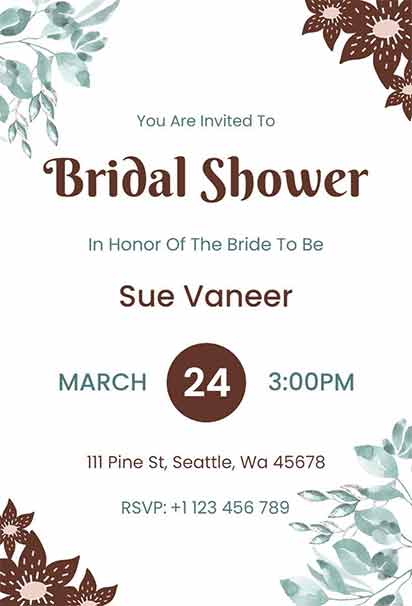
Soft pastels like blush pink, sage green, and lavender create feelings of romance, tranquility, and femininity. These colors work beautifully for traditional bridal shower themes and garden party celebrations. Blush pink particularly resonates with brides who appreciate classic romance, while sage green appeals to those drawn to natural, organic aesthetics.
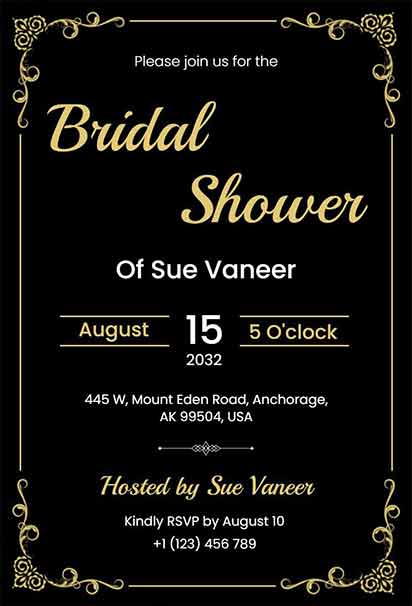
Bold jewel tones like emerald, sapphire, and burgundy communicate sophistication and luxury. These colors work exceptionally well for evening celebrations or brides with a dramatic personal style. When paired with gold foil accents, jewel tones create premium feelings that suggest elegant, upscale celebrations.
Monochromatic schemes using various shades of a single color create sophisticated cohesion while remaining visually interesting. Navy blue monochromatic designs feel nautical and fresh, while cream and gold combinations evoke luxury and timeless elegance.
Earth tones, including terracotta, warm browns, and deep green, appeal to brides planning rustic or outdoor celebrations. These colors feel grounded and natural, perfect for venue spaces like barns, gardens, or outdoor pavilions.
According to Rider’s honors thesis, color significantly shapes human perception from infancy onward—cool tones generally induce calm while warm hues evoke energy, and even subtle shifts in shade or saturation can dramatically alter emotional responses, making color selection critical in invitation design.2
How Do Floral Bridal Shower Invitations Create Timeless Elegance?
Floral bridal shower invitations represent the epitome of romantic celebration design, combining natural beauty with sophisticated typography to create invitations that feel both timeless and thoroughly contemporary. The enduring appeal of floral designs lies in their ability to evoke emotions of growth, beauty, and new beginnings – perfect metaphors for the journey ahead for any bride.
Classic Rose and Peony Arrangements
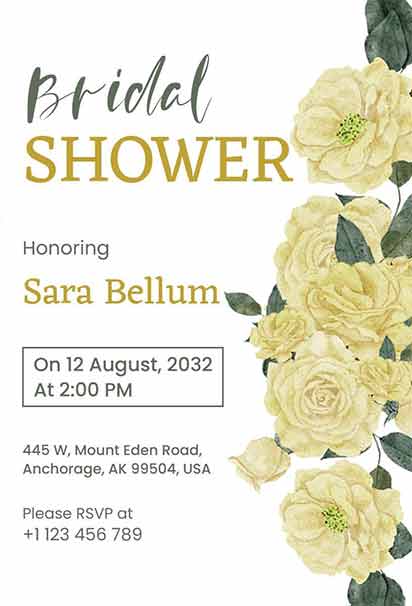
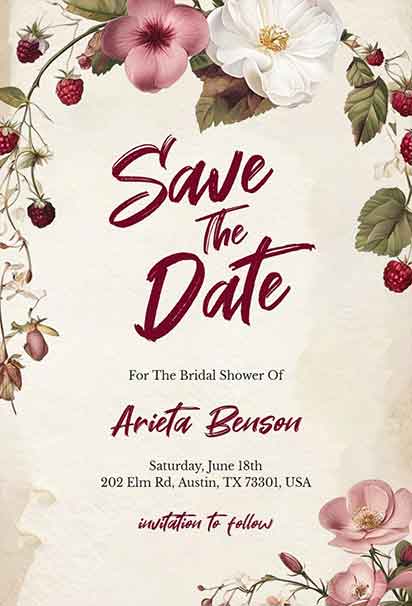
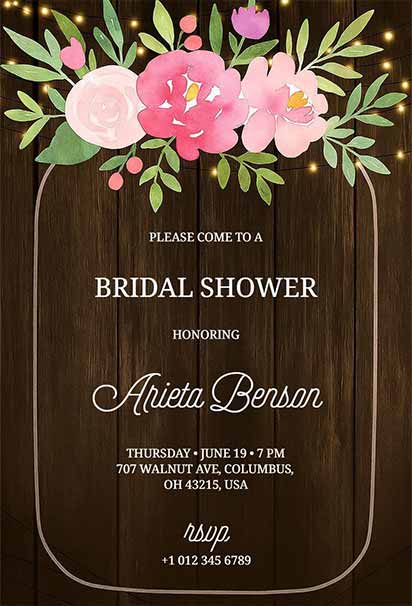
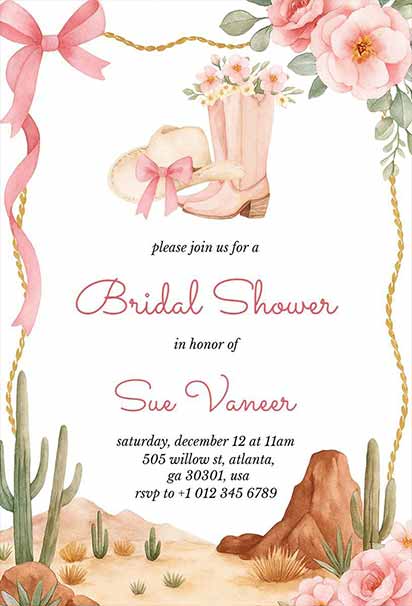
Roses and peonies dominate elegant floral bridal shower invitation designs due to their full, romantic blooms and universal associations with love and celebration. Classic rose arrangements work particularly well when rendered in watercolor techniques, creating soft, organic shapes that feel hand-painted and artisanal.
The most successful rose-based designs feature asymmetrical arrangements that create visual interest without overwhelming the text content. Placing larger rose blooms in upper corners with smaller buds trailing toward the center creates a natural flow that guides readers’ eyes through the invitation content in logical order.
Peony designs offer fuller, more dramatic visual impact with their layered petals and abundant foliage. These flowers work exceptionally well for spring celebrations, as their natural blooming season aligns perfectly with popular wedding months. Soft pink peonies paired with sage green leaves create feminine sophistication that appeals to brides seeking romantic elegance.
Color variations within rose and peony designs allow significant customization while maintaining classic appeal. Deep burgundy roses create dramatic sophistication, perfect for fall celebrations, while blush pink varieties offer delicate romance, ideal for spring and summer events.
The key to successful rose and peony invitation designs lies in balancing floral elements with adequate white space. Flowers should enhance rather than compete with text content, creating harmony between decorative and functional elements.
Wildflower and Garden-Inspired Designs
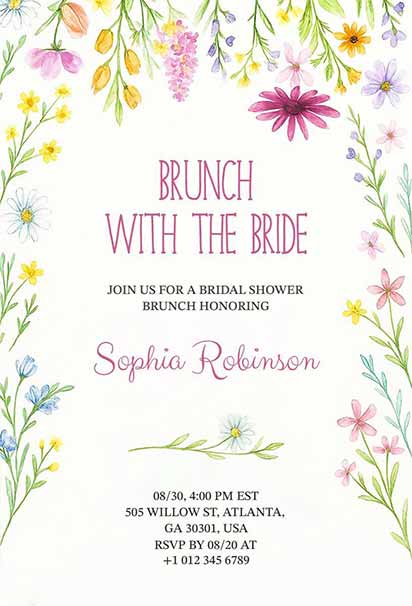
Wildflower bridal shower invitations capture free-spirited romance through loose, organic arrangements that feel naturally gathered rather than formally arranged. These designs appeal to brides planning outdoor celebrations or those drawn to bohemian aesthetic elements.
Garden-inspired designs typically feature multiple flower varieties in natural color combinations. Mixing daisies, lavender, baby’s breath, and field flowers creates visual texture and interest while maintaining cohesive color palettes. The informal arrangement style suggests relaxed, joyful celebrations where guests can expect casual elegance rather than formal traditions.
Botanical accuracy in wildflower designs adds authenticity that resonates with nature-loving brides. Using recognizable local flowers creates a connection to specific geographic regions and seasonal timing. For example, Texas bluebonnets immediately communicate location and spring timing, while California poppies suggest West Coast celebrations.
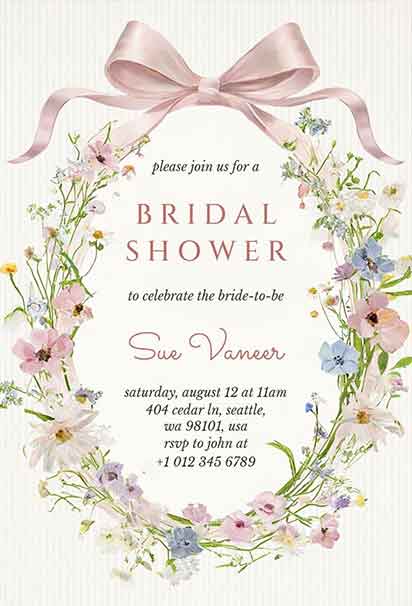
Watercolor techniques work particularly well for wildflower designs, as the medium’s natural fluidity matches flowers’ organic shapes. Loose, painterly effects create artisanal feelings that suggest custom illustration rather than mass-produced design templates.
Watercolor Floral Techniques
Watercolor floral techniques in bridal shower invitation designs create artistic sophistication that suggests custom illustration and premium quality. The medium’s natural translucency and organic edge qualities cannot be replicated through digital effects, making authentic watercolor designs particularly valuable.
Wet-on-wet techniques create soft, bleeding effects where colors flow naturally into one another. This approach works beautifully for background washes or large flower petals where subtle color variations add visual interest. The technique’s unpredictable nature creates unique effects that make each design feel one-of-a-kind.
Dry brush techniques offer more control and precise detail work, perfect for flower centers, leaf veins, and delicate accent elements. Combining wet and dry techniques within a single design creates depth and visual complexity that holds viewers’ attention.
Layering watercolor elements builds richness and dimension impossible to achieve through flat digital graphics. Starting with light washes and gradually adding darker details creates natural depth that mimics how actual flowers exist in three-dimensional space.
Color bleeding and gradients inherent in watercolor techniques create organic transitions that feel more natural than sharp digital edges. These subtle effects contribute to the overall romantic, artisanal aesthetic that makes watercolor floral invitations so appealing.
Seasonal Flower Selection for Different Wedding Dates
Selecting seasonally appropriate flowers for bridal shower invitation designs creates authenticity and helps establish celebration timing for guests. Understanding flower seasons also ensures design choices align with natural availability and cultural associations.
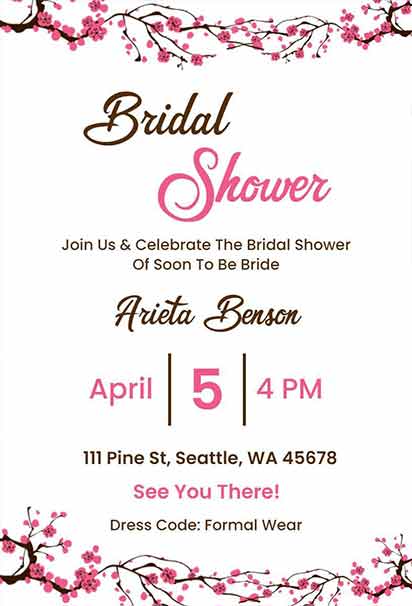
Spring celebrations call for tulips, daffodils, cherry blossoms, and peonies – flowers that symbolize renewal and fresh beginnings. These flowers work particularly well in soft pastel color palettes that reflect the season’s gentle awakening. Light pink cherry blossoms create delicate romance, perfect for April and May celebrations.
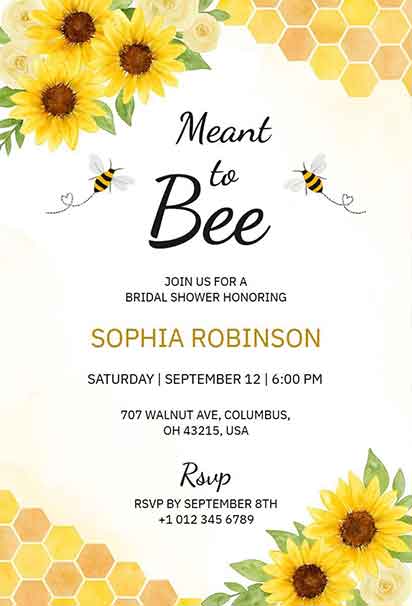
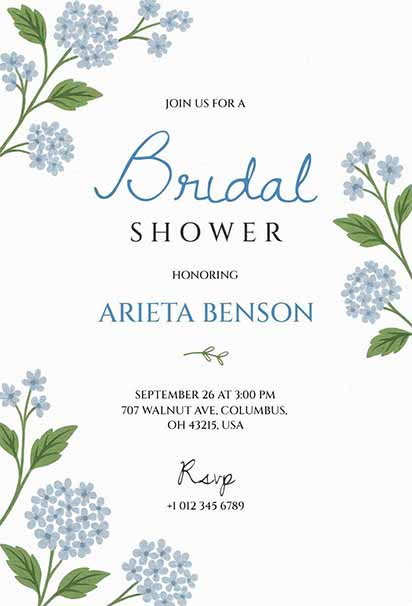
Summer designs benefit from roses, hydrangeas, sunflowers, and garden varieties that bloom in full abundance. These flowers can handle richer, more saturated colors that reflect summer’s vibrant energy. Bold sunflower designs work wonderfully for outdoor celebrations and daytime events.
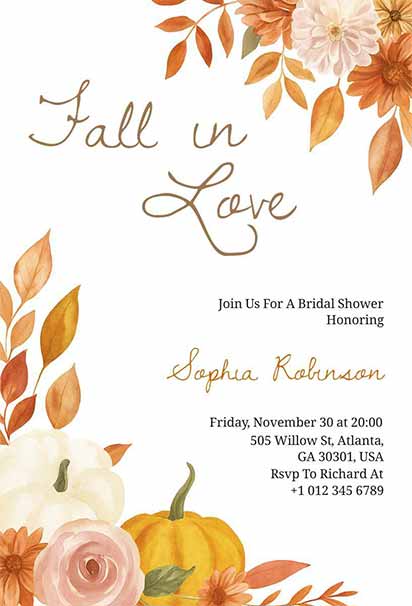
Fall celebrations embrace chrysanthemums, dahlias, marigolds, and autumn leaves for rich, warm color palettes. Deep burgundy and golden yellow combinations create sophisticated elegance, perfect for October and November timing. These designs often incorporate seasonal elements like wheat or berries for added texture.
Winter designs might feature evergreen elements, white roses, or amaryllis for celebrations during colder months. Silver and white color palettes with touches of deep green create elegant sophistication appropriate for indoor celebrations during December through February.
What Digital Bridal Shower Invitation Designs Work Best Online?
Digital bridal shower invitations have revolutionized how couples communicate celebration details, offering immediate delivery, interactive features, and cost-effective solutions without sacrificing aesthetic appeal. The most successful digital designs understand the unique requirements of screen viewing while maximizing the technological advantages unavailable in traditional print formats.

Mobile-Optimized Design Principles
Mobile optimization stands as the critical foundation for successful digital bridal shower invitation designs, as over 70% of recipients will view invitations on smartphones or tablets. Designs must remain legible and visually appealing across various screen sizes while maintaining fast loading times and intuitive navigation.
Vertical orientation works best for mobile viewing, as it aligns with natural phone holding positions and scrolling behaviors. Traditional horizontal invitation layouts often require zooming and horizontal scrolling, which creates poor user experiences on mobile devices.
Typography sizing becomes crucial for mobile readability. Text that appears perfectly readable on desktop screens often becomes too small for comfortable mobile viewing. The bride’s name should be at least 24 pixels, while supporting text should never fall below 16 pixels to ensure accessibility across different devices and vision capabilities.
Touch-friendly interactive elements require adequate sizing and spacing to prevent accidental taps. RSVP buttons, links, and any interactive features should be at least 44 pixels in height and width, with sufficient spacing between clickable elements to accommodate finger navigation.
Loading speed optimization ensures invitations display quickly, even on slower mobile data connections. This means optimizing image file sizes, using efficient file formats, and minimizing unnecessary visual effects that might cause loading delays.
Color contrast becomes even more important for mobile viewing, as screen brightness and viewing angle variations can affect readability. High contrast between text and background elements ensures legibility across different mobile viewing conditions.
Interactive Elements and Animation Possibilities
Interactive elements transform static digital bridal shower invitations into engaging experiences that create excitement and encourage immediate responses. However, successful interactive design requires restraint and purposeful implementation rather than gratuitous effects that distract from essential information.
Subtle hover effects on desktop viewing can reveal additional details or create gentle visual feedback without overwhelming the primary design. For example, hovering over the date might reveal weather information or venue details, while hovering over the bride’s name could display a favorite photo or meaningful quote.
Animated reveals work particularly well for building anticipation and guiding viewers through invitation content in a deliberate sequence. Text elements might fade in sequentially, ensuring readers absorb information in the intended order while creating visual interest that holds attention.
Interactive RSVP functionality eliminates friction in the response process while providing immediate confirmation to both guests and hosts. Well-designed RSVP systems allow guests to respond, add meal preferences, and include personal messages without leaving the invitation interface.
Embedded maps with interactive functionality help guests understand location details and plan transportation. These features prove particularly valuable for destination celebrations or venues that might be unfamiliar to many invitees.
Social sharing capabilities allow excited guests to share celebration details with their networks while maintaining appropriate privacy controls. This organic promotion can help build celebration excitement while respecting the host’s preferences regarding guest list management.
Social Media Sharing Considerations
Social media sharing capabilities in digital bridal shower invitation designs require a careful balance between promotional opportunities and privacy protection. Successful designs include sharing features that respect celebration intimacy while allowing appropriate excitement sharing.
Platform-specific optimization ensures invitations display correctly when shared across different social media environments. Instagram requires square formatting for optimal display, while Facebook sharing benefits from horizontal orientations that utilize available preview space effectively.
Privacy controls allow hosts to determine which invitation elements can be shared publicly versus remaining private for invited guests only. For example, celebration photos and general excitement might be shareable while specific venue addresses and timing details remain protected.
Branded hashtags help create social media communities around celebrations while making it easy for hosts to discover and collect shared content. Custom hashtags should be memorable, unique, and reflect either the bride’s name or the celebration theme.
Visual consistency between invitation designs and social media sharing graphics creates cohesive branding that reinforces celebration identity across all digital touchpoints. Using similar color palettes, typography, and design elements helps maintain aesthetic continuity.
RSVP Integration and Digital Functionality
Integrated RSVP functionality represents one of the most significant advantages of digital bridal shower invitations, providing immediate response capabilities that benefit both hosts and guests while reducing administrative burden. For comprehensive guidance on implementing effective RSVP integration in your digital invitations, proper planning ensures seamless guest response management.
Real-time response tracking allows hosts to monitor attendance numbers immediately, enabling better planning for catering, seating, and activity coordination. This immediate feedback proves invaluable for celebrations with tight planning timelines or limited venue capacity.
Automated reminder systems can send gentle follow-ups to guests who haven’t responded by specified deadlines, reducing the need for personal follow-up communications while maintaining polite etiquette. These systems should offer customizable timing and messaging to match the celebration’s tone and urgency.
Guest information collection beyond simple yes/no responses enables better celebration planning. Dietary restrictions, plus-one information, and activity preferences help hosts create more inclusive, enjoyable experiences for all attendees.
Integration with calendar applications allows guests to add celebration details directly to their digital calendars, reducing the likelihood of forgotten commitments and last-minute cancellations.
Communication channels for questions and updates keep all celebration information centralized and accessible. Guests can ask questions, receive updates, and stay informed about any changes without requiring separate communication threads.
How Can Vintage Bridal Shower Invitations Add Nostalgic Charm?
Vintage bridal shower invitations transport recipients to elegant eras of the past while celebrating timeless romance and sophisticated design principles. These designs appeal to brides who appreciate historical aesthetics, antique collections, or celebration venues with period architecture that calls for coordinating invitation styles.

Art Deco and 1920s-Inspired Designs
Art Deco bridal shower invitations capture the glamorous sophistication of the 1920s through geometric patterns, luxurious metallic accents, and bold typography that exudes confidence and celebration. This design era’s emphasis on symmetry, angular elements, and rich color combinations creates invitations that feel both historically authentic and thoroughly modern.
Geometric patterns form the foundation of successful Art Deco invitation designs. Chevron patterns, radiating sunburst motifs, and angular border elements create a visual structure that organizes information while adding decorative appeal. These patterns work particularly well when rendered in metallic foils or gradient effects that suggest luxury and craftsmanship.
Typography in Art Deco designs features bold, sans-serif fonts with strong geometric characteristics. Letters often include angular details, uniform stroke weights, and spacing that creates architectural stability. The most effective designs combine large, dramatic headlines with smaller supporting text in complementary weights.
Color palettes for 1920s-inspired invitations typically feature rich jewel tones paired with metallic accents. Deep emerald green with gold foil creates sophisticated luxury, while black and silver combinations offer dramatic elegance, perfect for evening celebrations. Burgundy and bronze pairings evoke vintage wine labels and suggest mature sophistication.
Metallic foil applications add authentic period luxury to Art Deco designs. Gold foil geometric borders, silver accent text, and bronze decorative elements create premium quality feelings that match the era’s emphasis on craftsmanship and attention to detail.
Border and frame designs in Art Deco style typically feature layered geometric elements that create depth and visual interest. Multiple border weights, corner ornaments, and radiating patterns frame invitation content while maintaining perfect symmetry that characterizes the design movement.
Victorian and Romantic Vintage Elements
Victorian-inspired bridal shower invitations embrace ornate romanticism through delicate lace patterns, flourishing botanical elements, and elaborate typography that celebrates feminine sophistication. These designs work particularly well for tea party celebrations or venues with historical architecture that complements period aesthetics.
Lace pattern integration creates delicate femininity that suggests handcrafted details and family heirloom quality. Digital lace effects should maintain fine detail and organic irregularity that distinguishes authentic-feeling designs from obviously computer-generated patterns. Subtle transparency effects allow lace elements to overlay text without compromising readability.
Botanical ornaments in Victorian designs feature detailed flower and vine illustrations that frame text content with organic elegance. Rose borders, ivy corners, and delicate leaf flourishes create romantic softness that balances ornate typography and decorative elements.
Typography choices for Victorian invitations often include elaborate serif fonts with decorative flourishes, ornamental capitals, and varied stroke weights that create visual hierarchy through style rather than size alone. Script fonts with connecting flourishes add handwritten elegance that suggests personal attention and care.
Color palettes for romantic vintage designs typically feature soft, muted tones that suggest aged paper and faded textiles. Dusty rose, sage green, cream, and soft lavender create feminine sophistication, while sepia and warm gray tones add authentic vintage feelings.
Ornamental borders and corners feature intricate details that reward close examination while creating overall impressions of luxury and craftsmanship. Scrollwork, floral motifs, and geometric patterns combine to create complex visual textures that feel historically authentic.
Retro Typography and Ornamental Borders
Retro typography in vintage bridal shower invitations requires understanding historical type design principles while adapting them for contemporary readability requirements. The most successful vintage designs balance authenticity with functionality, ensuring historical accuracy doesn’t compromise communication effectiveness.
Hand-lettered script fonts create artisanal feelings that suggest custom calligraphy and personal attention. These fonts work particularly well for bride names and romantic phrases, but should be used sparingly to maintain readability. Supporting text should use simpler fonts that complement without competing.
Ornamental capitals add decorative flair to key text elements while maintaining Victorian design authenticity. Drop caps, decorative initials, and ornate first letters create focal points that organize information while adding visual interest and period-appropriate sophistication.
Font pairing in vintage designs requires careful balance between ornate decorative fonts and readable supporting typography. The most successful combinations use elaborate fonts for names and titles while employing simpler serif fonts for details and information that guests need to read quickly and accurately.
Ornamental borders serve both functional and decorative purposes in vintage invitation designs. They create visual boundaries that organize content while adding decorative elements that reinforce historical design periods. Border complexity should balance visual interest with overall design clarity.
Flourishes and decorative elements add personality and historical authenticity to vintage designs. Scroll work, botanical ornaments, and geometric patterns should enhance rather than overwhelm text content, creating supporting visual interest that doesn’t compete for primary attention.
Distressed Textures and Aged Paper Effects
Aged paper effects and distressed textures add authentic vintage feelings to bridal shower invitation designs by suggesting historical documents and antique materials. However, these effects require subtle application to enhance rather than overshadow primary design elements.
Paper texture simulation should suggest natural aging rather than obvious distress. Subtle color variations, gentle edge softening, and organic texture patterns create authentic vintage feelings without appearing artificially processed or overly dramatic.
Ink fading effects can suggest historical printing methods and aged documents when applied judiciously. Slight color desaturation and gentle edge softening create impressions of vintage materials without compromising text readability or design clarity.
Stain and discoloration effects should remain extremely subtle to maintain elegance and readability. Light coffee stains, gentle edge darkening, and soft color variations can add character without making invitations appear damaged or poorly maintained.
Printing technique simulation, such as letterpress effects or foil stamping impressions, adds authenticity to vintage designs by suggesting historical production methods. These effects should enhance rather than distract from primary content and design elements.
Edge treatments, including gentle tearing, soft rounding, or vintage scalloping, can add period-appropriate character while maintaining a professional appearance. Edge effects should feel intentional and designed rather than accidental or damaged.
What Custom Bridal Shower Invitation Designs Reflect Personal Style?
Custom bridal shower invitations represent the pinnacle of personalized celebration design, incorporating unique elements that tell the bride’s story while creating one-of-a-kind invitations that guests will treasure long after the celebration ends. These designs require deeper investment but deliver unmatched personal relevance and emotional impact. If you’re new to invitation design, start with our foundational guide on how to make an invitation card to understand basic design principles before diving into custom elements.

Incorporating Personal Photos and Memories
Photo integration in custom bridal shower invitations creates immediate emotional connections while providing visual context that helps guests feel more invested in the upcoming celebration. The most successful photo-based designs balance personal imagery with readable text and cohesive design aesthetics.
Engagement photos work particularly well for bridal shower invitations as they capture the couple’s happiness and excitement during this special time. These images should be professionally edited to ensure consistent lighting and color correction that maintains quality when printed or viewed digitally.
Childhood photos of the bride add nostalgic charm that celebrates her journey to this milestone moment. Black and white vintage photos can be colorized or left natural, depending on the overall design aesthetic, while color photos should be adjusted to coordinate with the invitation color palettes.
Memory collages incorporating multiple meaningful photos create rich visual storytelling that engages viewers and builds celebration excitement. These designs require careful layout planning to ensure photos complement rather than compete with text content and maintain overall design cohesion.
Photo framing techniques should match overall invitation style, whether using ornate vintage frames for traditional designs or clean geometric borders for modern aesthetics. Digital photo treatments can simulate various artistic techniques from watercolor effects to sketch-style rendering.
Quality considerations for photo integration include resolution requirements, color management, and reproduction capabilities across different printing methods. Photos should maintain clarity and impact whether viewed on screens or printed on paper, requiring careful technical preparation.
Custom Illustrations and Hand-Drawn Elements
Hand-drawn elements in custom bridal shower invitations create artisanal uniqueness that cannot be replicated through template customization or stock graphics. These elements require artistic skill but deliver unmatched personality and custom appeal that reflects the bride’s style.
Portrait illustrations of the bride or couple add intimate personalization while maintaining artistic sophistication. These illustrations can capture physical likeness or focus on characteristic details like hairstyle, smile, or favorite accessories that make the artwork recognizably personal.
Venue illustrations provide meaningful context for destination celebrations or particularly significant locations. Custom artwork of the bride’s childhood home, the couple’s first date location, or the actual shower venue creates immediate recognition and emotional connection for guests.
Hobby and interest illustrations incorporate elements that reflect the bride’s personality, passions, and lifestyle. Whether she loves gardening, reading, traveling, or cooking, custom illustrations can weave these interests into invitation designs that feel authentically personal.
Pet portraits add beloved family members to invitation designs in ways that feel natural and charming. Whether featuring detailed illustrations or simple silhouettes, pet inclusion creates warmth and personality that resonates with animal-loving brides and their guests.
Botanical illustrations tailored to specific garden varieties, seasonal flowers, or meaningful plants create organic beauty that coordinates with celebration themes. These elements can be scientifically accurate or stylistically interpreted depending on overall design aesthetic preferences.
Monogram and Initial Design Integration
Monogram design in custom bridal shower invitations creates sophisticated personalization that can be used across multiple celebration materials for consistent branding. Well-designed monograms become signature elements that guests associate with the bride and her celebration style.
Traditional monogram formats follow established etiquette rules for letter placement and sizing. For unmarried brides, the format typically places the first name initial on the left, maiden name initial in the center (larger), and middle name initial on the right. These conventions ensure appropriateness for formal celebrations.
Modern monogram interpretations allow more creative freedom in letter arrangement, sizing, and decorative integration. Contemporary designs might stack letters vertically, incorporate them into geometric shapes, or weave them through botanical elements for unique artistic effects.
Font selection for monograms significantly impacts overall aesthetic and brand consistency. Script fonts create romantic elegance, while serif fonts offer traditional sophistication. Sans-serif fonts provide modern minimalism that works well for contemporary celebration styles.
Decorative elements surrounding monograms can reinforce celebration themes and personal style preferences. Floral borders, geometric frames, or vintage ornaments should complement rather than overwhelm the letterforms while adding visual interest and thematic consistency.
Color applications for monograms can create hierarchy and visual impact through the strategic use of contrasting or complementary colors. Metallic foils, gradient effects, or subtle color variations add sophistication while maintaining readability and aesthetic appeal.
Hobby and Interest-Based Themes
Interest-based themes in custom bridal shower invitations celebrate the bride’s personality by incorporating elements from her hobbies, career, or passions into cohesive design concepts that feel authentically personal rather than generically decorative.
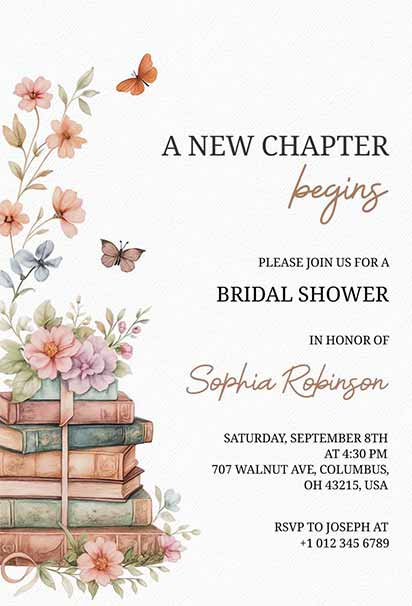
Book-loving brides benefit from literary-themed designs incorporating vintage book spines, library cards, favorite quotes, or illustrations that reference beloved stories. These elements can be subtle background textures or prominent design features, depending on desired emphasis levels.
Travel enthusiasts enjoy designs incorporating maps, vintage postcards, luggage tags, or illustrations of meaningful destinations. World map backgrounds, vintage travel stamps, or custom illustrations of favorite cities create wanderlust feelings that match adventurous personalities.
Garden and nature lovers appreciate botanical accuracy in flower and plant illustrations, seasonal elements that reflect outdoor interests, or designs that incorporate actual pressed flowers for authentic natural beauty. These elements create organic sophistication that feels genuine rather than decorative.
Artistic brides might enjoy designs that reference specific art movements, incorporate paint palette colors, or include subtle nods to favorite artists or techniques. Watercolor backgrounds, sketch-style illustrations, or color combinations inspired by famous paintings create sophisticated artistic references.
Culinary enthusiasts can incorporate food illustrations, recipe card styling, vintage kitchen utensils, or herb and spice botanical elements. These designs work particularly well for cooking-themed showers or brides known for their culinary skills and entertaining abilities.
Professional themes can acknowledge career achievements or interests through subtle incorporation of relevant symbols, color schemes, or design elements that reflect professional identity without overwhelming celebration focus.
What Minimalist Bridal Shower Invitation Designs Make Bold Statements?
Minimalist bridal shower invitations prove that sophisticated design often achieves maximum impact through intentional simplicity rather than decorative complexity. These designs appeal to modern brides who appreciate clean aesthetics, contemporary typography, and celebrations that emphasize relationships over elaborate decoration.
Strategic Use of White Space
White space, also known as negative space, serves as the foundation of successful minimalist bridal shower invitation designs by creating breathing room that allows essential elements to command proper attention. Strategic white space application requires understanding visual hierarchy and deliberate design restraint.
Generous margins around text content prevent designs from feeling cramped while creating sophisticated elegance that suggests premium quality and thoughtful design consideration. Adequate white space makes invitations feel expensive and professionally designed rather than amateur or template-based.
Asymmetrical layouts using white space can create dynamic visual interest while maintaining minimalist principles. Placing text content in one area while leaving significant white space in another creates modern sophistication that feels intentional and contemporary.
Typography hierarchy becomes more important in minimalist designs since decorative elements cannot support information organization. Different font sizes, weights, and spacing must establish reading order and content importance without relying on colors or graphics.
Visual breathing room between design elements prevents minimalist layouts from feeling stark or incomplete. Proper spacing between text blocks, adequate margins around focal elements, and strategic emptiness create sophisticated balance rather than boring simplicity.
Content organization through white space helps guests process information efficiently while creating sophisticated visual flow. Related information should be grouped with white space separating different content categories for improved readability and comprehension.
Single-Focus Design Elements
Single-focus design elements in minimalist bridal shower invitations create a powerful visual impact through intentional restriction to one primary decorative component. This approach requires selecting elements that carry sufficient visual weight to anchor entire designs while maintaining sophisticated simplicity.
Typography as decoration transforms functional text into primary design elements through strategic font selection, sizing, and placement. Large, elegant fonts can serve as both information delivery and visual focal points without requiring additional decorative support.
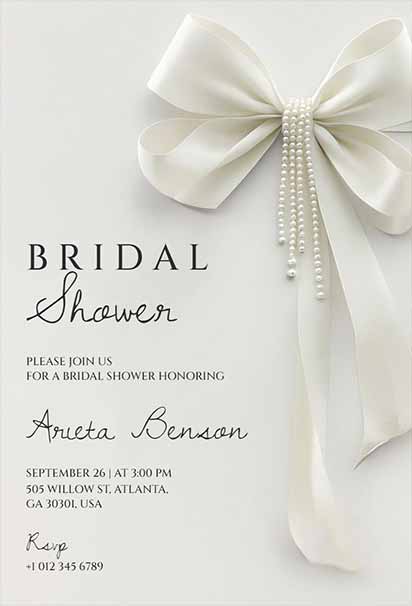
Single botanical elements like individual flowers, leaves, or branches create organic beauty while maintaining minimalist restraint. A single watercolor peony or geometric leaf illustration can provide sufficient visual interest without overwhelming clean design aesthetics.
Geometric shapes, including circles, rectangles, or triangles, can serve as organizational frameworks while adding contemporary visual interest. These elements should support rather than compete with text content while creating sophisticated structural foundations.
Monogram focus allows personal customization while maintaining minimalist principles. Large, elegantly designed monograms can serve as primary decorative elements while providing personal relevance and sophisticated visual anchoring.
Color as a single focus element uses strategic color application to create impact through restraint. A single accent color applied to specific design elements can create sophisticated emphasis while maintaining overall minimalist aesthetics.
Monochromatic Color Schemes
Monochromatic color schemes in minimalist bridal shower invitations create sophisticated cohesion through subtle color variations within single color families. These approaches demonstrate advanced design understanding while maintaining visual interest through tonal variety rather than color contrast.
Gray monochromatic schemes offer timeless elegance through variations from light silver to deep charcoal. These neutral palettes work well for contemporary celebrations and coordinate easily with various venue decorations and color schemes.
Blush monochromatic designs use variations from pale pink to deeper rose tones for romantic sophistication that maintains minimalist restraint. These palettes appeal to feminine tastes while avoiding overly decorative or childish associations.
Navy monochromatic schemes provide sophisticated depth through variations from pale blue-gray to deep navy. These palettes suggest nautical elegance or classic sophistication appropriate for various celebration themes and venues.
Sage green monochromatic approaches offer organic sophistication through variations from pale mint to deeper forest tones. These natural palettes work particularly well for outdoor celebrations or brides with bohemian aesthetic preferences.
Cream and white monochromatic designs create luxurious sophistication through subtle warm and cool variations within neutral palettes. These approaches work well for elegant venues and formal celebration styles.
Metallic monochromatic schemes using gold, silver, or rose gold variations create premium elegance while maintaining minimalist principles. These palettes suggest luxury and sophisticated taste preferences.
People Also Ask
How do I choose the right bridal shower invitation design for my theme?
Align visual elements with your theme, bride’s style, and venue. Garden parties need botanical elements, minimalist celebrations require clean typography, and tea parties call for delicate illustrations. Consider venue formality and ensure the design authentically reflects the bride’s personality rather than generic templates.
What size should bridal shower invitation designs be?
Standard size is 5×7 inches for cost-effective printing and postage. Square 5.25×5.25 inches offers modern appeal but requires extra postage. Digital invitations should be 1080×1920 pixels for mobile viewing. Oversized 5.5×8.5 inches create premium impressions but cost more to mail.
Can I create my bridal shower invitation designs?
Yes, using platforms like 1Invites with free templates and easy customization. You can also use a dedicated digital invitation maker that offers specialized features for event invitations. Template customization is most accessible, while Adobe Creative Suite offers complete control but requires more skill. Consider professional printing services for quality results with DIY designs.
What information should be included in bridal shower invitation designs?
Essential details: bride’s name (prominently displayed), complete date/time, venue name and full address, RSVP deadline, and contact method. Optional: parking info, dress code, gift registry details, and any special theme-related instructions.
How far in advance should bridal shower invitations be designed and sent?
Design 6-8 weeks before the event, send 4-6 weeks in advance. For holiday seasons, extend to 6-8 weeks’ advance notice. Digital invitations allow same-day delivery for rush situations.
What’s the difference between digital and print bridal shower invitation designs?
Digital designs prioritize mobile optimization and interactive features like embedded RSVPs. Print focuses on paper quality and tactile finishes. Digital uses RGB colors, print requires CMYK. Digital offers convenience and interactivity, print provides a premium physical experience.
How do I match my bridal shower invitation design to the wedding theme?
Use complementary colors and similar typography families without exact duplication. If you’re also designing wedding invitations, browse wedding invitation templates for inspiration on creating cohesive design themes. Reference similar decorative motifs while maintaining a distinct identity. Shower invitations can be more casual than wedding invitations while keeping aesthetic harmony.
What are some budget-friendly bridal shower invitation design options?
Digital designs eliminate printing/postage costs. Printable templates for home printing offer professional results at a low cost. Platforms like 1Invites provide free templates with upgrade options. Simplified typography-focused designs reduce production costs.
How do I ensure my bridal shower invitation design stands out?
Focus on authentic personal touches reflecting the bride’s personality. Use proper design principles: typography hierarchy, balanced layouts, and strategic color application. Include meaningful customization through relevant colors, illustrations, or personal elements rather than generic templates.
Frequently Asked Questions
Effective designs combine a clear information hierarchy with theme reflection and personal touches. Establish visual hierarchy through typography, sizing, and color contrast—bride’s name first, then event details. Connect design with the bride’s authentic style for emotional impact.
They should complement, not duplicate, wedding invitations. Use similar color palettes or design elements while maintaining a distinct identity. Shower invitations can be more casual while keeping overall aesthetic harmony.
Popular combinations: blush and gold (romantic), sage and cream (organic elegance), navy and rose gold (contemporary luxury). Choose based on the bride’s personality, theme, season, and venue. Monochromatic schemes offer sophisticated cohesion.
Consider her style preferences, interests, and aesthetic sensibilities. Subtly weave personal interests through relevant colors, illustrations, or typography. Match her overall style—modern minimalist, vintage romantic, or bohemian eclectic.
Avoid cluttered layouts, hard-to-read decorative fonts, and generic stock imagery. Use strategic white space, prioritize readability for essential details, and choose graphics that specifically relate to the bride or theme.
Research theme-appropriate visual elements: botanical illustrations for garden parties, delicate teacup graphics for tea parties, clean geometry for modern themes. Ensure the invitation design matches the actual celebration formality and atmosphere.
Use a vertical 1080×1920 pixel format for mobile viewing. Save as high-resolution PNG or PDF for clarity across devices. Optimize file size for quick loading and ensure interactive elements function reliably.
Use CMYK color mode for accurate print colors, maintain 300 DPI resolution, and include bleed areas for edge-to-edge printing. Professional color proofing helps avoid screen-to-print color differences.
Templates provide structure but customize each with unique colors, typography, and personal elements. Create template variations rather than identical reproductions to maintain individual relevance while ensuring design efficiency.
Conclusion
The perfect bridal shower invitation design serves as the opening chapter of an unforgettable celebration story, setting expectations and creating excitement that extends far beyond the initial viewing moment. From elegant floral arrangements that capture timeless romance to modern minimalist approaches that make sophisticated statements, each design choice should authentically reflect the bride’s unique personality while communicating essential event details.
Throughout our exploration of 25 stunning design examples, we’ve discovered that successful bridal shower invitations share common characteristics: clear information hierarchy, thoughtful color application, appropriate typography selection, and meaningful personal touches that create emotional connections with recipients.
Implementation Framework:
- Define Your Vision: Begin by identifying the bride’s authentic style preferences, celebration theme, and overall event goals. Consider her favorite colors, decorating aesthetic, and personality characteristics that should be reflected in the invitation design. For comprehensive guidance through the entire creation process, follow our detailed tutorial on how to make bridal shower invitations.
- Select Design Elements: Choose typography combinations, color palettes, and visual elements that support your established vision while maintaining professional quality standards. Balance decorative appeal with functional readability, ensuring essential information remains accessible while creating desired aesthetic impressions.
- Create Information Hierarchy: Organize celebration details with a clear visual priority that guides readers through content in logical order. The bride’s name should command primary attention, followed by event type, date, time, and location details in descending order of importance.
- Optimize for Format: Ensure design elements work effectively in your chosen medium, whether digital platforms requiring mobile optimization or print formats needing proper color management and resolution specifications.
- Test and Refine: Review completed designs with different audiences and viewing conditions to identify potential readability issues or communication problems before final production or distribution.
Ready to create stunning bridal shower invitations that perfectly capture your celebration’s spirit? Explore our extensive invitation templates and design tools to bring your vision to life with professional-quality results that honor the special bride in your life while creating excitement for the unforgettable celebration ahead.
Reference
- Retrieved July 9, 2025. Typography, U.S. Web Design System Documentation (General Services Administration).
- Rider, R. M. (2010). Color Psychology and Graphic Design Applications (Senior Honors Thesis). Liberty University.