

Planning an event involves many details, from choosing the venue to finalizing the guest list. One crucial element that ensures a well-organized event is the RSVP. If you’ve ever sent or received an invitation, you’ve likely come across this term. But what does RSVP stand for, and why is it so important? In this blog, we’ll explore RSVP in invitation means, its significance in event planning, and how to encourage timely responses from guests to make your event a success.
The History of RSVP in Invitations
The concept of RSVP dates back to the early days of French aristocracy, where etiquette played a significant role in social gatherings. During the 17th and 18th centuries, nobility hosted elaborate events where strict social rules applied. One such rule was the expectation that guests would formally confirm or decline an invitation. RSVP mean on invitations originated from the French phrase “Répondez s’il vous plaît,” which translates to “Please respond.”
As this practice gained popularity, it became a standard part of event invitations worldwide. In earlier times, guests would send handwritten replies to formally accept or decline an invitation. Over time, technology has transformed this process, making it more convenient through digital RSVP options like email, websites, and digital RSVP invitation maker platforms.
Understanding RSVP in invitation means helps us appreciate its role in today’s event planning and etiquette.
What Does RSVP Mean?
RSVP stands for “Répondez s’il vous plaît,” a polite request for guests to confirm their attendance at an event. It is commonly seen in RSVP cards, wedding invitations, corporate event invitations, birthday party invites, and other formal or semi-formal gatherings.
RSVP meaning in an invitation serves several purposes:
- Helps hosts prepare: Knowing how many guests will attend ensures appropriate arrangements for seating, food, and entertainment.
- Manages costs: Event expenses are often calculated per person, so an accurate guest count helps control the budget.
- Enhances guest experience: Proper planning ensures that guests feel comfortable and accommodated.
- Respects the host’s efforts: Responding to an RSVP is a sign of courtesy and appreciation for the invitation.
Now that we understand what RSVP in invitation means let’s dive into why it is a crucial element in event planning.
Why Is RSVP Important for Your Event?
Ignoring RSVPs can lead to last-minute chaos and disorganization. Here’s why they matter:
Helps with Guest Count Accuracy
Whether you’re planning a wedding, corporate event, or birthday party, knowing how many guests will attend is crucial. It helps you:
- Avoid overbooking or underbooking the venue.
- Ensure there’s enough food and drinks for all attendees.
- Make seating arrangements easier and more efficient.
An accurate headcount allows for better event logistics, ensuring every guest has a comfortable experience.
Saves Time and Money
For example, if you are hosting a corporate gala and expect 200 guests but only 150 RSVP, you can adjust your catering order to avoid wastage and additional costs. Using a digital RSVP invitation maker simplifies the process of tracking guest confirmations, reducing stress and saving money. For example, if you are hosting a corporate gala and expect 200 guests but only 150 RSVP, you can adjust your catering order to avoid wastage and additional costs.
Improves Event Planning and Organization
From choosing the right seating layout to preparing the perfect amount of giveaways, RSVP in invitation means plays a crucial role in streamlining event logistics. This is especially important for formal events like weddings and corporate gatherings. Using tools like 1Invites, an advanced online invitation maker, can help event planners manage guest lists seamlessly and ensure an organized process.
Reduces Last-Minute Stress
Last-minute surprises can be stressful for event hosts. If guests fail to RSVP, it can lead to uncertainty about the headcount. Having confirmed guest numbers ahead of time allows for smoother event execution with minimal disruptions.
Shows Courtesy and Respect
Responding to an RSVP request is not just about logistics—it’s about etiquette. Informing the host of your attendance status shows appreciation and respect for their efforts in planning the event.
Types of RSVP Formats
RSVPs can be collected in multiple ways, depending on the event type and audience. Here are some popular RSVP formats:
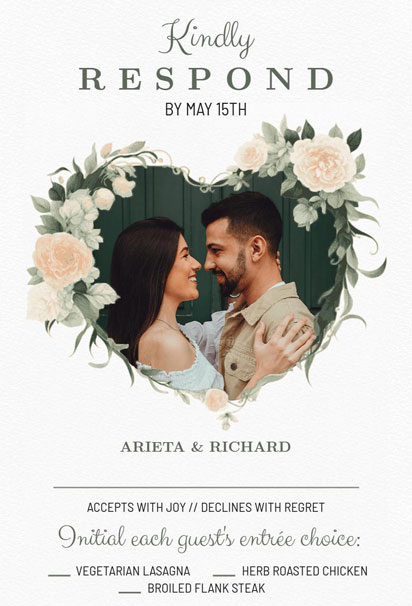
Traditional Paper RSVP Cards
- Often included with formal invitations (e.g., weddings).
- Guests fill out and mail back the response card.
- Best for formal events where a personal touch is preferred.

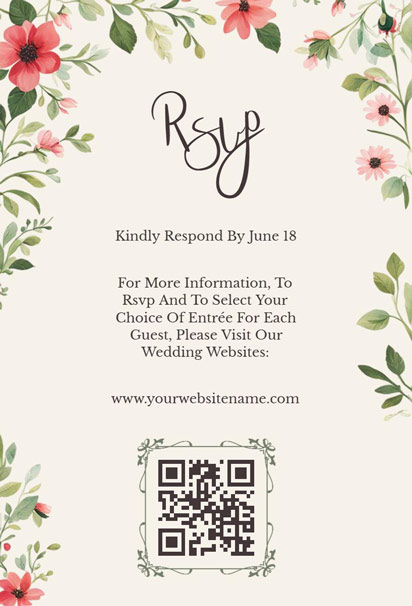
Digital RSVP
Guests can respond through wedding or event websites.
- Easy to track and update guest responses.
- Ideal for modern events with tech-savvy guests.
Email RSVP
- Guests reply to a designated email address.
- Allows for personal messages or additional guest requests.
- Best for semi-formal events.
Phone Call or Text RSVP
- Simple and direct; guests confirm attendance via call or text.
- Best for smaller, casual gatherings.

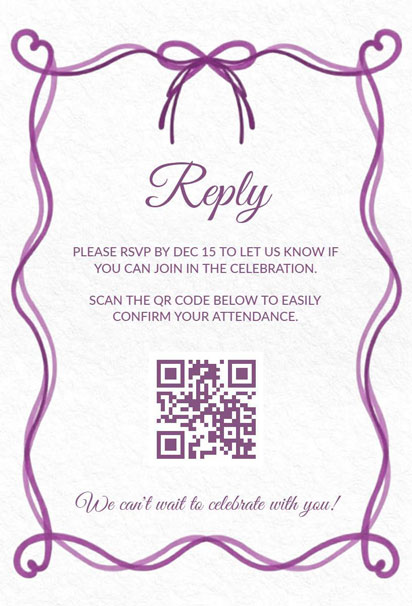
QR Code RSVP
- QR codes on invitations lead to an RSVP form.
- Efficient and environmentally friendly.
- Ideal for tech-driven or corporate events.
How to Encourage Guests to RSVP on Time
Getting guests to respond promptly can sometimes be a challenge. Here are some tips to increase RSVP responses:
Set a Clear Deadline
Clearly state the RSVP deadline on the invitation (e.g., “Please RSVP by [date]”). This creates urgency and encourages quick responses.
Offer Easy RSVP Options
Make it simple for guests to respond by providing multiple RSVP methods, such as an online form, text message, or QR code.
Follow Up with Reminders
A gentle reminder a week before the RSVP deadline can prompt forgetful guests to respond. A quick email, text, or call can make a difference.
Make RSVPs Fun
Adding a creative element, like a poll for song requests or meal preferences, can make RSVPing more engaging.
Be Direct with Non-Responders
If some guests haven’t replied, reach out personally to confirm their attendance.
What to Do If Guests Don’t RSVP?
It’s frustrating when guests ignore RSVP requests. Here’s how to handle it:
- Send a follow-up message: A polite reminder via text or email can prompt a response.
- Assume a non-response means “No.: If the deadline passes with no response, consider the guest as not attending.
- Call or message close friends/family: If it’s important to know for sure, a quick call can clear things up.
Common RSVP Mistakes and How to Avoid Them
Despite including RSVP requests, many hosts face issues with responses. Here are some common mistakes and how to prevent them:
Not Setting a Clear RSVP Deadline
- Mistake: Some invitations simply say “Please RSVP” without specifying a date.
- Solution: Always include a deadline, such as “Please RSVP by June 10, 2025.”
Not Providing Easy RSVP Options
- Mistake: Some guests prefer online responses, while others favor traditional methods.
- Solution: Offer multiple RSVP options, including wedding websites, email, or text messaging.
Forgetting to Follow Up
- Mistake: Some guests forget to respond, leading to uncertainty.
- Solution: Send a friendly reminder a few days before the RSVP deadline.
Allowing Too Many Last-Minute Changes
- Mistake: Guests changing their RSVP after finalizing arrangements can disrupt planning.
- Solution: While accommodating emergencies is necessary, setting a clear RSVP policy helps minimize last-minute changes.
By avoiding these mistakes, hosts can streamline the RSVP process and ensure an organized event.
Digital vs. Traditional RSVPs: Pros and Cons
With advancements in technology, event planners can choose between digital and traditional RSVP methods. Both options have their advantages and drawbacks.
Digital RSVPs
Pros:
- Convenient and quick responses.
- Automated tracking and guest list updates.
- Environmentally friendly as it reduces paper waste.
Cons:
- Older guests may not be comfortable with digital methods.
- Emails or texts may get lost or ignored.
Traditional RSVP Cards
Pros:
- Adds a personal and formal touch to events like weddings.
- Ideal for keeping physical records and memorabilia.
Cons:
- Takes longer to receive responses.
- Higher costs due to printing and postage expenses.
Many event planners now combine both methods, offering digital RSVPs for convenience while including traditional RSVP cards for guests who prefer a formal approach.
Conclusion
An RSVP is a key element in organizing a smooth and successful event. It helps with guest counts, budgeting, and overall planning. Offering multiple RSVP options—traditional cards, digital platforms, or texts—ensures convenience for all guests. Setting clear deadlines and sending reminders can improve response rates. A well-managed RSVP process reduces stress for the host and enhances the guest experience, making the event more enjoyable for everyone.