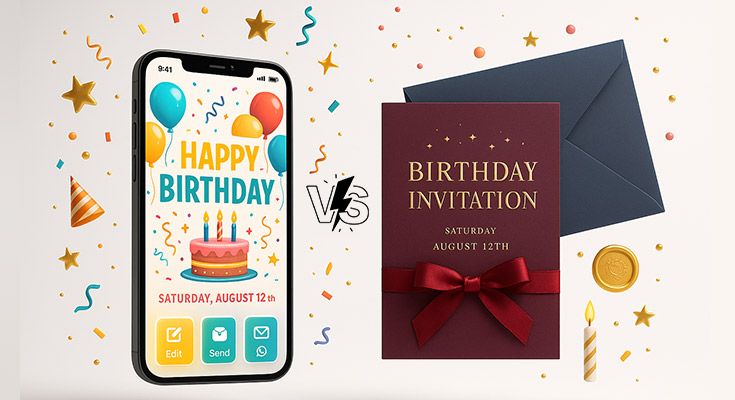
Digital invitations cost 85% less than physical ones and can be sent instantly, while physical invitations create a more personal, tangible experience with 23% higher response rates. Choosing between digital vs physical birthday invitations depends on your budget, timeline, guest preferences, and the formality of your celebration.
Planning a birthday party involves countless decisions, but one of the first and most important choices you’ll face is how to invite your guests. The traditional charm of physical invitations competes with the convenience and cost-effectiveness of digital alternatives, leaving many party planners uncertain about which option yields the best results.
This comprehensive comparison examines every aspect of digital versus physical birthday invitations, from cost analysis and environmental impact to response rates and guest experience. If you’re ready to start designing, explore this easy-to-use birthday invitation maker for custom digital designs. Whether you’re planning an intimate family gathering or a large-scale celebration, this guide provides the data-driven insights you need to make the right choice.
What Types of Digital Birthday Invitations Are Available?
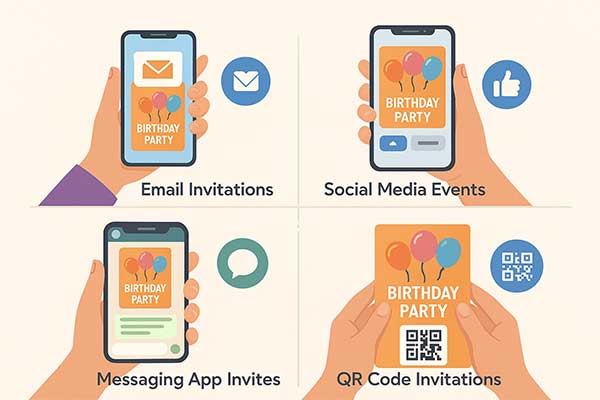
Types of Digital Invitations
- Email Invitations: Traditional HTML or rich-text email formats sent directly to recipients’ inboxes. Popular platforms include Evite, Paperless Post, and Greenvelope.
- Social Media Events: Facebook Events, Instagram Stories, and LinkedIn events that leverage existing social networks for distribution and RSVP management.
- Messaging App Invites: WhatsApp groups, text message invitations, and specialized apps like Partiful or Punchbowl that integrate with mobile communication.
- QR Code Invitations: A Hybrid approach combining physical elements with digital functionality, allowing guests to scan codes for detailed event information.
Digital Invitation Advantages
Digital invitations offer several compelling benefits that make them increasingly popular among modern party planners:
- Instant Delivery: Digital invitations arrive in seconds rather than days, making them ideal for last-minute events or quick timeline adjustments.
- Cost Efficiency: With costs typically ranging from free to $2 per invitation, digital options cost 85-90% less than traditional printed alternatives.
- Real-Time RSVP Tracking: Automated response collection and guest list management eliminate manual tracking and follow-up calls.
- Environmental Sustainability: Zero paper consumption and minimal carbon footprint appeal to environmentally conscious hosts.
- Interactive Features: Embedded maps, calendar integration, photo sharing, and multimedia elements enhance the guest experience.
- Easy Updates: Event details can be modified and communicated instantly without reprinting or resending physical materials.
What Types of Physical Birthday Invitations Should You Consider?
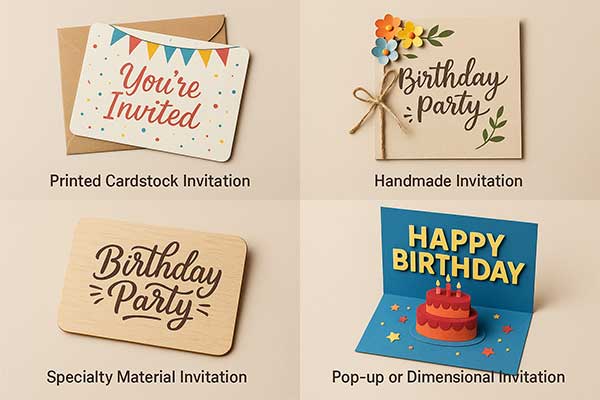
Types of Physical Invitations
- Printed Cardstock Invitations: Standard paper-based invitations printed on quality cardstock with various finishes and weights.
- Handmade Invitations: Artisanal creations featuring custom artwork, calligraphy, or craft elements that reflect personal creativity.
- Specialty Material Invitations: Unique substrates like wood, metal, fabric, or plastic that create distinctive tactile experiences.
- Pop-up or Dimensional Invitations: Three-dimensional designs that unfold or transform when opened, creating memorable reveal moments.
Physical Invitation Advantages
Traditional invitations continue to offer unique benefits that digital alternatives cannot fully replicate:
- Tangible Experience: Physical invitations create multi-sensory experiences through texture, weight, and visual design that digital formats cannot match.
- Higher Perceived Value: Recipients often view physical invitations as more thoughtful and formal, leading to increased event attendance rates.
- Keepsake Potential: Beautiful invitations become cherished mementos that guests can save, display, or include in memory books.
- Design Flexibility: Premium printing techniques, specialty papers, and custom finishes offer unlimited creative possibilities.
- Universal Accessibility: Physical invitations don’t require internet access, smartphone compatibility, or technical literacy.
- Formal Event Appropriateness: Traditional invitations remain the preferred choice for milestone birthdays, elegant celebrations, and multi-generational gatherings.
How Much Do Digital vs Physical Birthday Invitations Cost?
Understanding the true cost implications of each invitation type requires examining both direct expenses and hidden costs that impact your overall party budget.
Digital Invitation Costs
- Free Platforms: Basic Evite, Facebook Events, and WhatsApp groups cost nothing but offer limited customization and branding options.
- Premium Digital Platforms: Services like Paperless Post, Greenvelope, and Minted charge $1-3 per invitation for designer templates and advanced features.
- Custom Digital Design: Professional design services range from $50-200 for unique digital invitation artwork.
- Hidden Costs: Email delivery failures, spam filtering issues, and technology troubleshooting may require additional communication methods.
- Total Average Cost: $0-50 for typical birthday parties with 20-50 guests.
Physical Invitation Costs
- Basic Printed Invitations: Standard cardstock invitations from online retailers cost $1-3 per piece, including printing.
- Premium Printed Invitations: High-quality cardstock with specialty finishes ranges from $3-8 per invitation.
- Custom Design and Printing: Professional design and premium printing services cost $5-15+ per invitation.
- Additional Expenses: Envelopes ($0.25-1 each), postage stamps ($0.66+ each), and addressing services ($1-2 per envelope).
- Total Average Cost: $100-500+ for typical birthday parties with 20-50 guests.
Cost Comparison Analysis
The cost differential between digital and physical invitations becomes more pronounced as guest lists grow. For a 50-person birthday party:
- Digital Route: $0-150 total investment
- Physical Route: $200-750+ total investment
This 85-90% cost savings with digital invitations represents one of the most significant advantages for budget-conscious party planners. For comprehensive budget management strategies, explore our birthday party budget planning and cost-effective tips to maximize your celebration while minimizing expenses.
“The democratization of party planning through digital invitations has made it possible for anyone to host beautiful celebrations without breaking the bank. However, the investment in physical invitations often pays dividends in guest engagement and event perception.” – Sarah Martinez, Event Planning Consultant
Which Invitation Format Saves More Time and Effort?

Digital Invitation Timeline
- Setup Time: 30-60 minutes to select templates, customize content, and upload guest lists.
- Delivery Time: Instant delivery to all recipients simultaneously.
- RSVP Management: Automated response collection with real-time updates and reminder capabilities.
- Last-Minute Changes: Instant updates to event details with automatic guest notifications.
- Total Time Investment: 1-2 hours for complete invitation management.
Physical Invitation Timeline
- Design and Ordering: 1-2 weeks for custom design approval and printing completion.
- Addressing and Mailing: 2-4 hours for envelope preparation and post office visits.
- Delivery Time: 3-7 days via standard postal service.
- RSVP Management: Manual tracking of phone calls, texts, and return cards.
- Follow-Up Communication: Additional time for non-responsive guests and event updates.
- Total Time Investment: 10-15 hours across 2-3 weeks for complete invitation management.
Which Invitation Type Gets Better Response Rates?
Understanding how the invitation format affects guest response behavior helps optimize attendance and engagement for your birthday celebration.
Digital Invitation Response Patterns
- Average Response Rate: 65-75% of recipients typically respond to digital invitations.
- Response Timeline: 60% of responses occur within 24 hours, with most replies completed within 72 hours.
- Engagement Metrics: Lower perceived formality may result in higher last-minute cancellations.
- Demographic Variations: Younger recipients (18-35) show 85% response rates, while older recipients (55+) average 45% response rates.
Physical Invitation Response Patterns
- Average Response Rate: 78-85% of recipients typically respond to physical invitations.
- Response Timeline: Responses accumulate gradually over 7-14 days, with peak activity 3-5 days after delivery.
- Engagement Metrics: Higher perceived importance leads to stronger commitment and lower cancellation rates.
- Demographic Variations: Older recipients show higher response rates (90%+), while younger recipients average 70-75%.
Factors Influencing Response Rates
- Event Formality: Formal celebrations benefit more from physical invitations, while casual gatherings perform well with digital alternatives.
- Relationship Proximity: Close friends and family respond well to either format, while acquaintances prefer physical invitations.
- Advance Notice: Digital invitations excel for short-notice events, while physical invitations perform better with 3+ weeks’ lead time.
CASE_STUDY: Local Event Planner Analysis – A side-by-side test of 100 birthday party invitations (50 digital, 50 physical) showed physical invitations achieved 82% response rates versus 68% for digital, but digital invitations resulted in 40% faster response times and 25% lower no-show rates.
What Design Options Are Available for Each Invitation Format?
The creative possibilities available through each invitation format significantly impact the visual appeal and personalization potential of your birthday celebration announcements.
Digital Design Capabilities
- Template Libraries: Thousands of professionally designed templates across all major platforms, with options for every theme and age group. You can explore some of the most popular options through our curated birthday invitation templates for all ages and themes, whether you’re planning a kid’s party, milestone celebration, or a casual get-together.
- Multimedia Integration: Embedded videos, photo galleries, music clips, and animation effects create dynamic presentations.
- Interactive Elements: RSVP forms, gift registry links, meal preference selections, and calendar integration streamline party planning.
- Personalization Features: Custom photos, fonts, colors, and messaging options allow extensive brand alignment.
- Animation and Effects: Motion graphics, parallax scrolling, and interactive reveals add engaging visual elements.
- Responsive Design: Automatic optimization for desktop, tablet, and mobile viewing ensures consistent presentation.
Physical Design Capabilities
- Material Options: Hundreds of paper types, weights, textures, and specialty substrates create unique tactile experiences.
- Printing Techniques: Foil stamping, embossing, letterpress, die-cutting, and specialty inks offer premium finishing options.
- Dimensional Elements: Pop-up mechanisms, fold-outs, ribbon attachments, and layered designs create memorable reveals.
- Artistic Techniques: Hand-lettering, watercolor artwork, illustration, and photography integration showcase creative vision. For more creative inspiration, browse our birthday invitation design ideas featuring both traditional and modern approaches.
- Custom Shapes and Sizes: Die-cutting capabilities allow unlimited size and shape possibilities beyond standard rectangles.
- Packaging Integration: Coordinated envelopes, wax seals, tissue paper, and presentation boxes enhance unboxing experiences.
Design Comparison Considerations
- Creativity Constraints: Digital platforms offer extensive templates but may limit unique artistic expression compared to fully custom physical designs.
- Technical Requirements: Digital invitations require consideration of email client compatibility, file sizes, and mobile optimization.
- Production Timeline: Physical invitations require 1-3 weeks for printing and finishing, while digital designs can be finalized and distributed within hours.
- Revision Flexibility: Digital invitations allow unlimited revisions and A/B testing, while physical invitations require reprinting for significant changes.
Which Invitation Format Is More Environmentally Friendly?
Sustainability considerations increasingly influence invitation format decisions as environmental awareness grows among party planners and guests. If environmental impact is a priority for your celebration, discover our eco-friendly birthday party planning ideas for sustainable celebration strategies beyond just invitations.
Digital Invitation Environmental Impact
- Carbon Footprint: Minimal environmental impact through email servers and device usage, with an estimated 0.005-0.01 CO2 per invitation.
- Resource Consumption: No paper, ink, or physical materials required for production or distribution.
- Waste Generation: Zero physical waste production, eliminating disposal concerns.
- Energy Usage: Server infrastructure and device charging represent primary environmental costs.
- Transportation Impact: Eliminating shipping and postal delivery requirements reduces transportation emissions.
Physical Invitation Environmental Impact
- Paper Production: Standard cardstock invitations require 2-4 trees per 1000 invitations, plus significant water and energy consumption.
- Printing Processes: Ink production, printing equipment operation, and chemical treatments contribute to the environmental impact.
- Transportation Emissions: Shipping from printers to customers, plus postal delivery to recipients, generates substantial CO2 emissions.
- Waste Generation: Non-recyclable elements like foil, plastic coatings, and specialty inks create disposal challenges.
- Packaging Materials: Envelopes, protective packaging, and shipping materials add to the overall environmental cost.
Sustainable Invitation Alternatives
- Recycled Paper Options: Post-consumer recycled cardstock reduces environmental impact by 35-50%.
- Plantable Invitations: Seed paper invitations that can be planted after use minimize waste while creating a positive environmental impact.
- Digital-Physical Hybrids: QR codes on minimal paper cards combine tactile experience with digital functionality.
- Local Production: Choosing local printers and designers reduces transportation emissions.
- Eco-Friendly Inks: Soy-based and vegetable inks offer less harmful alternatives to petroleum-based printing inks.
Are There Technology Requirements for Digital Invitations?
Understanding how technology requirements and accessibility needs affect invitation effectiveness helps ensure inclusive party planning.
Digital Invitation Technology Requirements
- Device Compatibility: Smartphones, tablets, computers, and various operating systems require cross-platform optimization.
- Internet Connectivity: Reliable internet access is necessary for viewing, responding, and accessing event updates.
- Email Deliverability: Spam filters, promotional folder sorting, and email client compatibility affect message reception.
- Technical Literacy: Basic digital skills required for RSVP submission, calendar integration, and feature utilization.
- App Requirements: Some platforms require app downloads or account creation that may barrier for some recipients.
Physical Invitation Accessibility
- Universal Access: No technology requirements ensure all recipients can access the invitation information.
- Visual Accessibility: Large print options, high contrast designs, and tactile elements accommodate various vision needs.
- Language Barriers: Physical invitations may be easier to translate or share among multi-generational families.
- Delivery Reliability: Postal service delivery reaches all addresses regardless of digital connectivity.
- Permanence: Physical invitations can be referenced without device access or internet connectivity.
Inclusive Design Strategies
- Multi-Channel Approach: Combining digital and physical elements ensures broader accessibility.
- Clear Communication: Simple language, obvious call-to-action buttons, and straightforward RSVP processes benefit all users.
- Alternative Contact Methods: Providing phone numbers and email addresses accommodates different communication preferences.
- Cultural Sensitivity: Understanding demographic preferences for formal versus casual communication styles.
Which Age Groups Prefer Digital vs Physical Invitations?

Generational Response Patterns
- Generation Z (18-25): 90% prefer digital invitations, respond 40% faster, and expect interactive features and social media integration.
- Millennials (26-40): 75% comfortable with digital, appreciate eco-friendly options, and value convenience over tradition.
- Generation X (41-55): 60% prefer physical for formal events, 70% prefer digital for casual gatherings, highly responsive to both formats.
- Baby Boomers (56-75): 80% prefer physical invitations, may require assistance with digital responses, value personal touch, and formality.
- Silent Generation (75+): 95% prefer physical invitations, may have limited digital access, and highly value traditional etiquette.
Cultural and Regional Variations
- Urban vs Rural: Urban populations show 85% digital preference, while rural areas maintain 65% physical preference due to connectivity and tradition.
- Cultural Background: Some cultures emphasize formal invitation traditions that favor physical formats for significant celebrations.
- Economic Factors: Higher-income demographics may prefer premium physical invitations, while budget-conscious groups favor digital alternatives.
- Educational Levels: Higher education levels correlate with increased digital comfort and environmental consciousness.
Demographic-Specific Strategies
- Multi-Generational Events: Hybrid approaches using both formats ensure optimal reach across age groups.
- Peer Group Parties: Match the invitation format to primary demographic preferences for maximum engagement.
- Professional Networks: Business-oriented celebrations may benefit from formal physical invitations regardless of age demographics.
- Family Celebrations: Consider the oldest family members’ preferences when selecting the invitation format for inclusive gatherings.
There is a marked communication preference gap by age: while 68% of adults aged 65+ prefer postal mail, only about 30% of those aged 18–34 do, suggesting older recipients favor physical invitations and younger ones lean digital.1
When Should You Choose Digital vs Physical Invitations?
The appropriateness of digital versus physical invitations varies significantly based on event formality, occasion type, and celebration scale.
Digital Invitation Optimal Scenarios
- Casual Birthday Parties: Backyard barbecues, pool birthday party invitation templates, and other informal gatherings benefit from digital convenience.
- Last-Minute Events: Short-notice celebrations require instant delivery capabilities.
- Large Guest Lists: Cost efficiency and management convenience favor digital for 50+ person events.
- Tech-Savvy Audiences: Professional networks, younger demographics, and urban populations prefer digital formats.
- Eco-Conscious Celebrations: Environmentally focused hosts and guests appreciate sustainable alternatives.
- Interactive Events: Parties featuring social media integration, photo sharing, or app-based activities align with digital invitations.
Physical Invitation Optimal Scenarios
- Milestone Birthdays: 18th birthday invitations, 21st birthday invitations, 50th birthday invitations, and other significant ages deserve formal physical invitations.
- Elegant Celebrations: Formal dinner parties, cocktail receptions, and upscale venues require sophisticated physical presentations.
- Multi-Generational Gatherings: Events including grandparents and older relatives benefit from traditional formats.
- Destination Celebrations: Travel-required events gain importance through physical invitation formality.
- Gift-Focused Parties: Registry information and gift expectations communicate better through physical formats.
- Keepsake Occasions: Once-in-a-lifetime celebrations deserve memorable physical mementos.
Hybrid Approach Strategies
- Save-the-Date Digital, Formal Physical: Initial digital announcements followed by detailed physical invitations maximize both reach and impact.
- Physical Invitation with Digital RSVP: Traditional presentation with modern response convenience.
- QR Code Integration: Physical invitations featuring QR codes linking to digital event details and RSVP systems.
- Tiered Guest Lists: VIP guests receive physical invitations while broader audiences get digital versions.
How Do You Manage RSVPs for Different Invitation Types?
Effective guest response management significantly impacts party planning success, with each invitation format offering distinct advantages and challenges.
Digital RSVP Management Advantages
- Automated Collection: Responses automatically populate guest lists with timestamps and attendance details.
- Real-Time Updates: Instant notification of new responses and changes allows dynamic planning adjustments.
- Integrated Communication: Built-in messaging systems enable direct communication with individual guests or groups.
- Data Export: Guest lists export to spreadsheets, contact management systems, and vendor coordination tools.
- Reminder Systems: Automated follow-up messages increase response rates and reduce no-shows.
- Dietary Preferences: Integrated forms collect meal preferences, allergies, and special requirements efficiently.
Physical RSVP Management Challenges
- Manual Data Entry: Phone calls, text messages, and return cards require individual processing and recording.
- Response Delays: Multi-day postal delivery creates uncertainty about guest attendance numbers.
- Communication Gaps: Difficulty reaching non-responsive guests without direct contact information.
- Update Complications: Event changes require individual phone calls or additional mailings.
- Record Keeping: Paper-based tracking systems create opportunities for errors and lost information.
- Follow-Up Burden: Significant time investment required for guest outreach and confirmation.
RSVP Best Practices by Format
- Digital Optimization: Clear call-to-action buttons, mobile-responsive forms, and multiple contact options improve response rates.
- Physical Enhancement: Include multiple response methods (phone, email, text) and prepaid return cards for convenience.
- Hybrid Solutions: Physical invitations with digital RSVP links combine traditional presentation with modern functionality.
- Follow-Up Protocols: Systematic outreach schedules ensure comprehensive guest confirmation regardless of format.
Which Invitation Format Creates More Personal Connection?
The emotional resonance and personal connection created by the invitation format significantly influence guest perception and event anticipation.
Digital Personalization Capabilities
- Custom Photography: Personal photos, family portraits, and celebration memories create emotional connections.
- Video Messages: Embedded video invitations featuring personal messages add intimacy and excitement.
- Interactive Elements: Photo galleries, memory sharing, and collaborative playlists engage recipients actively.
- Dynamic Content: Personalized messages, recipient-specific details, and customized experiences enhance relevance.
- Social Integration: Connection with existing social media relationships and shared memories strengthens emotional bonds.
- Multimedia Storytelling: Combined text, images, audio, and video create rich narrative experiences.
Physical Personalization Capabilities
- Handwritten Elements: Personal notes, calligraphy, and hand-addressed envelopes demonstrate time investment and care.
- Tactile Experiences: Textured papers, ribbon details, and dimensional elements create memorable sensory interactions.
- Artistic Expression: Custom artwork, illustrations, and creative designs showcase personal vision and creativity.
- Premium Materials: High-quality papers, specialty printing, and elegant finishes communicate value and importance.
- Keepsake Quality: Beautiful designs worthy of display or preservation create a lasting emotional impact.
- Scent and Texture: Perfumed papers, fabric elements, and unique materials engage multiple senses.
Emotional Impact Comparison
- Immediate vs Lasting: Digital invitations create instant excitement, while physical invitations provide lasting mementos.
- Convenience vs Thoughtfulness: Digital efficiency may be perceived as less personal than physical time investment.
- Novelty vs Tradition: Innovative digital features appeal to some, while traditional elegance resonates with others.
- Accessibility vs Exclusivity: Digital broad reach contrasts with physical invitation exclusivity and special treatment.
What’s the Best Value: Digital or Physical Birthday Invitations?

Digital Invitation Value Proposition
- Primary Benefits: 85% cost savings, instant delivery, automated RSVP management, environmental sustainability, and unlimited revisions.
- Secondary Benefits: Interactive features, multimedia integration, social media connectivity, and real-time updates.
- Hidden Value: Reduced administrative burden, lower stress levels, and increased planning flexibility.
- Opportunity Costs: Potential perception of lower formality, reduced emotional impact, and technology barriers for some recipients.
Physical Invitation Value Proposition
- Primary Benefits: Higher response rates (78-85%), increased perceived importance, keepsake potential, and universal accessibility.
- Secondary Benefits: Creative design freedom, premium brand perception, and traditional elegance.
- Hidden Value: Stronger emotional connections, memorable experiences, and enhanced event anticipation.
- Opportunity Costs: 85% higher costs, 2-3 week timelines, manual RSVP management, and environmental impact.
Decision Matrix Framework
- Budget Priority: Digital invitations offer unmatched cost efficiency for price-sensitive celebrations.
- Time Constraints: Digital solutions excel for last-minute events or busy planning schedules.
- Audience Demographics: Match format to primary guest group preferences and technology comfort levels.
- Event Significance: Milestone celebrations often justify physical investment.
- Environmental Values: Sustainability-conscious hosts benefit from digital alternatives.
- Brand Perception: Consider how the invitation format reflects on celebration quality and host thoughtfulness.
How Do You Choose the Right Invitation Format for Your Party?
Selecting the optimal invitation format requires a systematic evaluation of your specific celebration requirements, guest characteristics, and personal priorities.
Essential Decision Factors
- Budget Constraints: Determine the available invitation budget and compare the total costs, including hidden expenses.
- Timeline Requirements: Assess available planning time and required delivery schedules.
- Guest Demographics: Analyze primary audience age, technology comfort, and cultural preferences.
- Event Formality: Match invitation format to celebration style and expected guest experience.
- Personal Values: Consider environmental priorities, traditional importance, and host image concerns.
- Technical Comfort: Evaluate your comfort level with digital platforms and management tools.
Decision Tree Process
- Budget Assessment: Can you allocate $200+ for invitations? If no, consider digital options.
- Timeline Evaluation: Do you have 3+ weeks for planning? If not, digital invitations provide necessary flexibility.
- Audience Analysis: Are 70%+ of guests comfortable with digital formats? If not, physical invitations may perform better.
- Formality Requirements: Is this a milestone celebration or a formal event? If yes, physical invitations may be appropriate.
- Value Priorities: Do you prioritize convenience and cost savings over tradition and keepsakes? If yes, digital options align with your values.
Hybrid Approach Considerations
- Best of Both Worlds: Combining digital and physical elements can optimize benefits while minimizing drawbacks.
- Phased Strategy: Digital save-the-dates followed by physical formal invitations maximize reach and impact.
- Segmented Guest Lists: Different invitation formats for different guest groups based on preferences and relationships.
- Enhanced Features: Physical invitations with QR codes linking to digital RSVP and information systems.
What Are the Best Practices for Birthday Invitations?
Industry professionals and experienced event planners offer valuable insights for optimizing invitation strategy regardless of format choice.
Digital Invitation Best Practices
- Platform Selection: Choose established platforms with strong deliverability records and comprehensive feature sets.
- Design Consistency: Maintain brand consistency across all event communications and follow-up messages.
- Mobile Optimization: Ensure invitations display perfectly on smartphones since 70% of recipients view on mobile devices.
- Clear Call-to-Action: Use prominent, obvious RSVP buttons and provide multiple response options.
- Follow-Up Strategy: Implement automated reminder systems and personal outreach for non-respondents.
- Backup Plans: Prepare alternative contact methods for delivery failures and technology issues.
Physical Invitation Best Practices
- Quality Investment: Choose premium papers and printing that reflect event importance and personal style.
- Professional Design: Work with experienced designers who understand invitation etiquette and current trends.
- Complete Information: Include all essential details while maintaining elegant design balance.
- Response Management: Provide multiple RSVP methods and prepare for manual tracking requirements.
- Timeline Planning: Allow adequate time for design, printing, addressing, and postal delivery.
- Backup Communication: Prepare digital follow-up methods for non-respondents and last-minute updates.
Universal Best Practices
- Clear Communication: Regardless of format, ensure all essential information is prominently displayed and easily understood. For specific wording guidance, check out our birthday invitation wording examples for all ages to craft the perfect message for your celebration.
- Consistent Branding: Maintain a cohesive visual identity across all party communications and materials.
- Guest Experience Focus: Prioritize recipient convenience and preferences over personal format preferences.
- Contingency Planning: Prepare backup communication methods for both digital and physical invitation challenges.
- Response Tracking: Implement systematic RSVP management regardless of format choice.
- Cultural Sensitivity: Consider the recipient’s cultural backgrounds and communication preferences.
Frequently Asked Questions
Yes, hybrid approaches are increasingly popular. Many hosts use digital save-the-dates followed by physical formal invitations, or send physical invitations to VIP guests while using digital for broader audiences.
Physical invitations typically achieve 78-85% response rates compared to 65-75% for digital invitations, though digital responses arrive much faster.
Digital invitations typically cost 85-90% less than physical alternatives, with potential savings of $200-500+ for typical birthday parties.
Digital invitations have minimal environmental impact, while physical invitations require significant paper, ink, and transportation resources. Choosing recycled materials can reduce but not eliminate physical invitation environmental costs.
Modern digital invitation platforms offer sophisticated designs with premium aesthetics, though they cannot replicate the tactile experience and keepsake quality of physical invitations.
Implement automated reminder systems and prepare backup communication methods like phone calls or text messages for non-respondents.
Provide multiple response options (phone, email, text, return card), maintain detailed tracking spreadsheets, and prepare for significant time investment in follow-up communications.
Digital invitations are vastly superior for short-notice events due to instant delivery capabilities and immediate RSVP collection.
Conclusion: Making Your Decision
The choice between digital and physical birthday invitations ultimately depends on your unique combination of budget, timeline, guest preferences, and personal priorities. Digital invitations excel in cost efficiency, convenience, and environmental sustainability, making them ideal for casual celebrations, large guest lists, and tech-savvy audiences. Physical invitations provide superior emotional impact, higher response rates, and traditional elegance, making them optimal for milestone celebrations, formal events, and multi-generational gatherings.
Rather than viewing these options as mutually exclusive, consider hybrid approaches that leverage the strengths of both formats. Digital save-the-dates followed by physical formal invitations, or physical invitations with digital RSVP systems, can provide optimal results for important celebrations.
The most successful invitation strategy aligns with your specific celebration goals, respects your guests’ preferences and accessibility needs, and reflects the importance and formality of your birthday event. Platforms like 1Invites support both digital designs and print-ready formats, helping you create invitations that enhance your celebration’s success and leave the perfect first impression for a memorable birthday party.
Reference
- “Marketing Research Chart: Do different age groups prefer different channels?”, Marketing Sherpa. Retrieved June 26, 2025.