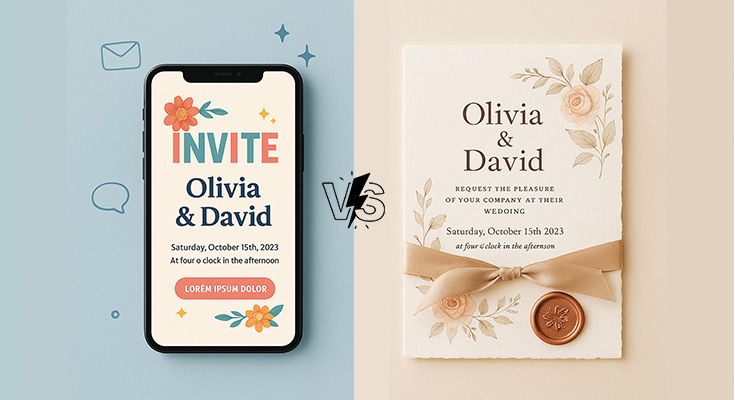
Are you torn between sending digital invitations or traditional printed invites for your upcoming event? You’re not alone. With the ongoing debate of e-invites vs printed invites, many event planners are evaluating the best option that balances style, convenience, and sustainability. As digital invitations become increasingly sophisticated. If you’re considering going digital, using a reliable digital invitation maker can help you create elegant e-invites that rival the charm of printed cards.
The choice between e-invites and printed invites affects your budget, guest experience, environmental impact, and event’s overall impression. In this comprehensive guide, we’ll explore every aspect of the e-invites vs printed invites debate, helping you make an informed decision that aligns with your event goals, budget, and guest preferences.
What Are E-Invites and How Do They Compare to Printed Invites?
E-invites, or electronic invitations, are digital versions of traditional paper invitations sent via email, social media, or messaging platforms. Unlike printed invites that require physical printing, mailing, and handling, e-invites exist entirely in digital format and can be customized with interactive elements like animations, videos, and clickable RSVP buttons.
Modern e-invites have evolved far beyond simple text emails. Today’s digital invitations feature:
- High-resolution graphics and custom designs
- Interactive elements and animations
- Embedded videos and music
- One-click RSVP functionality
- Real-time guest list management
- Automatic reminder systems
Printed invitations remain the traditional choice, offering tangible keepsakes that guests can display and treasure. They provide a physical presence that many consider more formal and personal, especially for milestone events like weddings, anniversaries, and formal corporate gatherings.
Are E-Invites Cheaper Than Printed Invites?
The cost difference between e-invites and printed invites is substantial and often decisive for budget-conscious event planners. Digital invitations cost an average of $100 per event, while printed invitations range from $400-$650 per couple for weddings and similar formal events.
E-Invite Cost Breakdown
- Premium platform subscription: $50-$150 annually(though there are some solid free invitation makers if you’re just getting started)
- Design customization: $0-$50 (many templates included)
- Unlimited sending: No additional per-invite costs
- RSVP management: Included in most platforms
- Total average cost: $100 per event
Printed Invite Cost Breakdown
- Design and printing: $2-$8 per invitation
- Postage costs: $0.60-$1.20 per invite (depending on weight/size)
- Additional mailings: Save-the-dates, RSVP cards, thank you notes
- Rush printing fees: 20-50% additional cost for last-minute orders
- Total average cost: $400-$650 for 100 guests
The cost advantage of e-invites becomes even more pronounced for larger guest lists. While printed invites cost scale linearly with guest count, e-invites maintain the same low cost regardless of whether you’re inviting 50 or 500 people.
What Hidden Costs Should I Consider for Each Option?
Understanding the full cost picture requires examining hidden expenses that many event planners overlook when budgeting for invitations.
Hidden Costs of E-Invites
- Technical Setup Time: While sending is instant, initial setup and customization can take 2-4 hours for complex designs.
- Follow-up Communication: Digital invites may require additional phone calls or texts to ensure delivery, especially for guests who don’t regularly check email.
- Backup Printing: Many hosts end up printing key invites anyway for elderly relatives or as keepsakes, adding unexpected costs.
- Premium Features: Advanced customization, video integration, or white-label branding often require paid upgrades.
Hidden Costs of Printed Invites
- Reprinting for Errors: Typos or address changes can require expensive reprints of entire batches.
- Postage Increases: Heavier papers, unique sizes, or multiple inserts can push postage costs into higher tiers.
- International Shipping: Overseas guests may require expensive international postage or courier services.
- Storage and Handling: Secure storage, assembly time, and addressing can add significant labor costs.
- Response Management: Tracking paper RSVPs requires manual data entry and follow-up systems.
How Do Digital Invitations Impact the Environment Compared to Printed Invites?
Environmental considerations increasingly influence invitation choices, especially among eco-conscious millennials and Gen Z event planners. The environmental impact comparison reveals significant differences between digital and printed options.
Environmental Impact of Printed Invitations
Paper production for invitations contributes to deforestation, with each ton of paper requiring 17 trees. A typical wedding invitation suite (save-the-date, invitation, RSVP card, and thank you note) uses approximately 0.5 pounds of paper per guest.
Carbon Footprint: Printed invitations generate carbon emissions through:
- Paper manufacturing processes
- Printing and production facilities
- Transportation and postal delivery
- Waste disposal and recycling processes
Water Usage: Paper production requires substantial water resources, with invitation-quality cardstock requiring even more water per sheet than standard paper.
Chemical Processing: High-quality invitation papers often involve bleaching, dyeing, and coating processes that can impact local water systems.
Environmental Benefits of E-Invites
Digital invitations eliminate paper waste, though they do have some environmental impact through server energy consumption and device usage.
Immediate Benefits:
- Zero paper consumption
- No transportation emissions
- Elimination of printing chemicals
- Reduced postal system load
Long-term Impact: The carbon footprint of email servers and digital infrastructure is distributed across millions of users, making the per-invitation environmental cost negligible.
According to Yale’s sustainability program, reducing paper use through digital communication helps cut down on deforestation, energy consumption, and greenhouse gas emissions, demonstrating the environmental benefits of digital invitations over printed ones.1
Do Digital Invitations Get Lost in Email Spam Folders?
Email deliverability represents one of the most significant concerns about e-invites. Spam filters have become increasingly sophisticated, sometimes catching legitimate invitations alongside unwanted promotional emails.
Spam Filter Challenges
- Common Triggers: Certain words, excessive graphics, or poor sender reputation can trigger spam filters. Invitation-related terms like “celebration,” “party,” and “RSVP” combined with multiple images can increase spam risk.
- Platform Reliability: Established invitation platforms typically maintain better sender reputations and higher deliverability rates than personal email accounts.
Improving E-Invite Delivery
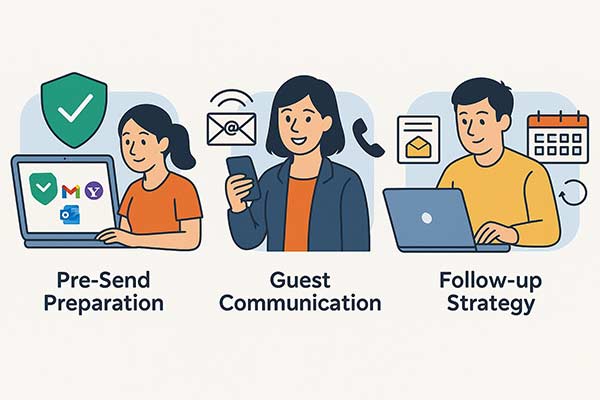
Pre-Send Preparation:
- Use reputable invitation platforms with established sender reputations
- Test send to multiple email providers (Gmail, Yahoo, Outlook)
- Avoid spam trigger words in subject lines
- Include clear sender identification
Guest Communication:
- Notify guests in advance that digital invitations are coming
- Provide phone backup for critical guests
- Use multiple communication channels for important events
Follow-up Strategy:
- Monitor delivery reports provided by invitation platforms
- Send reminder emails 1-2 weeks after the initial invitation
- Have backup communication methods for non-responders
Which Format Is More Appropriate for Formal Events Like Weddings?
Event formality significantly influences invitation format appropriateness, with traditional etiquette guidelines often favoring printed invitations for milestone celebrations. When planning wedding invitations, consider exploring our wedding invitation wording ideas and examples, and browse through various wedding invitation templates to find the perfect style for your celebration.
Formal Event Considerations
- Traditional Weddings: Etiquette experts traditionally recommend printed invitations for formal weddings, especially those involving older family members or traditional cultural elements.
- Cultural Expectations: Some cultures and communities maintain strong preferences for printed invitations as demonstrations of respect and investment in the celebration.
- Modern Adaptations: Younger couples are increasingly choosing e-invites for even formal weddings, prioritizing sustainability and cost savings over traditional expectations.
Event-Specific Recommendations
Highly Formal Events (Black-tie weddings, galas, memorial services):
- Printed invitations are generally preferred
- Consider a hybrid approach with digital save-the-dates
- Ensure design quality matches event formality
Semi-Formal Events (Cocktail parties, anniversary celebrations, graduations):
- Either format is appropriate depending on guest demographics
- E-invites with elegant designs can match formality requirements
- Consider guest preferences and technical comfort levels
Casual Events (Birthday parties, baby showers, casual gatherings):
- E-invites are often preferred for convenience and cost savings
- Interactive elements can enhance guest engagement
- Quick turnaround is possible for last-minute events
How Do Different Age Groups Respond to E-Invites vs Printed Invites?
Understanding generational preferences helps optimize invitation strategies and ensure maximum guest engagement across diverse age groups.
Generational Response Patterns
Understanding how different generations respond to invitations can help you choose the format that best resonates with your guest list. Each age group brings unique expectations shaped by their digital comfort levels and communication preferences.
Baby Boomers (Born 1946-1964):
- Strong preference for printed invitations
- May require assistance accessing digital invitations
- Value tangible keepsakes and traditional formality
- Often have reliable postal addresses, but inconsistent email usage
Generation X (Born 1965-1980):
- Comfortable with both formats
- Practical preference often drives choice
- Appreciate the convenience of digital RSVP management
- Balance traditional values with modern efficiency
Millennials (Born 1981-1996):
- Generally prefer e-invites for convenience and environmental benefits
- Expect interactive features and seamless RSVP processes
- Comfortable with smartphone-optimized designs
- Value cost savings and creative digital elements
Generation Z (Born 1997-2012):
- Strong preference for digital communication
- Expect social media integration and sharing capabilities
- Comfortable with app-based invitation management
- May view printed invites as wasteful or outdated
Generation Alpha (Born 2013–2024):
- Currently rely on parents or guardians to manage invitations
- Will grow up entirely immersed in digital-first communication
- Likely to embrace interactive, animated, or video-based e-invites
- May view printed materials as novelty items rather than necessities
Multi-Generational Event Strategies
- Hybrid Approaches: Many successful events use combination strategies, sending printed invites to older relatives and e-invites to younger guests.
- Communication Bridging: Younger family members can help older relatives access and respond to digital invitations, creating intergenerational engagement opportunities.
Can Digital Invites Look as Elegant as Printed Ones?
Design sophistication has dramatically improved for digital invitations, with modern platforms offering professional-quality templates and customization options that rival traditional printing. First time creating digital invites? This digital invitation maker guide walks through the whole process step by step.
For design inspiration, explore our birthday invitation design ideas and tips or browse through our collection of floral invitation templates for elegant options.
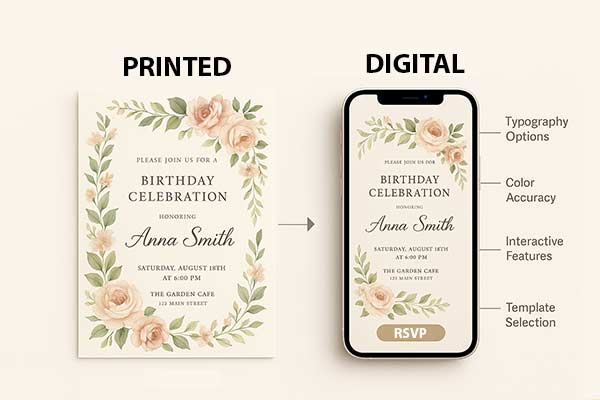
Digital Design Capabilities
- High-Resolution Graphics: Modern e-invite platforms support print-quality resolution (300 DPI), ensuring a crisp, professional appearance across all devices.
- Typography Options: Extensive font libraries include classic serif fonts, modern sans-serifs, and decorative script fonts that match traditional invitation styling.
- Color Accuracy: Advanced color management ensures consistent appearance across different devices and email clients.
Interactive Design Elements
- Animation and Movement: Subtle animations can add sophistication without appearing gimmicky – floating petals, gentle fades, or elegant reveals.
- Video Integration: Background videos or personal messages can create emotional connections impossible with static printed materials.
- Interactive Features: RSVP buttons, calendar integration, and venue maps provide functionality that enhances rather than detracts from elegant design.
- Smart Design Features: Some of the newer AI invitation makers can even suggest design elements based on your event type and guest preferences.
Design Quality Factors
- Template Selection: Professional platforms offer designer-created templates that follow established design principles and current aesthetic trends.
- Customization Depth: Advanced platforms allow extensive customization of colors, fonts, layouts, and imagery while maintaining design coherence.
- Mobile Optimization: Responsive designs ensure invitations look elegant on smartphones, tablets, and desktop computers.
Which Format Makes RSVP Tracking Easier?
Response management represents a critical operational difference between e-invites and printed invitations, significantly impacting event planning efficiency.
E-Invite RSVP Advantages
- Instant Response Collection: Guests can respond immediately upon viewing the invitation, capturing responses when engagement is highest.
- Automated Data Management: Responses automatically populate guest lists, eliminating manual data entry and reducing transcription errors.
- Real-Time Updates: Host dashboards provide instant visibility into response rates, dietary restrictions, and plus-one counts.
- Follow-Up Automation: Platforms can automatically send reminder emails to non-responders at predetermined intervals.
- Integration Capabilities: Many platforms integrate with event planning software, catering systems, and seating chart applications.
For hosts seeking efficient response tracking, e-invites offer a seamless experience. You can track RSVP responses online easily through dedicated tools that streamline confirmations and help you stay organized.
Traditional RSVP Challenges
- Manual Processing: Each paper response requires individual handling, data entry, and filing – time-intensive for large events.
- Response Delays: Postal delivery adds days or weeks to response cycles, complicating time-sensitive planning decisions.
- Lost Responses: RSVP cards can be misplaced by guests or lost in postal delivery, requiring follow-up communications.
- Unclear Responses: Handwritten responses may be illegible or ambiguous, requiring clarification calls.
RSVP Management Best Practices
Efficient RSVP tracking ensures smooth event planning and accurate headcounts. Tailoring your RSVP process to match the invitation format enhances guest experience and response rates.
E-Invite Optimization:
- Use clear, prominent RSVP buttons
- Minimize the required information to reduce abandonment
- Provide multiple response options (attending/not attending/maybe)
- Include space for dietary restrictions and special requests
- Send automated confirmation emails for peace of mind
Printed Invite Optimization:
- Include pre-addressed, stamped return envelopes
- Use clear, simple response cards with checkboxes
- Provide online RSVP alternatives via wedding websites
- Set RSVP deadlines 3-4 weeks before events
- Plan follow-up strategies for non-responders
Are E-Invites Faster to Create and Send?
Time efficiency often determines invitation format choice, especially for last-minute events or busy event planners managing multiple celebrations.

E-Invite Timeline Advantages
- Design Phase: Template-based designs can be customized and finalized within 1-2 hours, compared to days or weeks for printed invitation design and proofing cycles.
- Production Time: Digital invitations require no physical production, eliminating the time spent on printing, cutting, and assembly.
- Distribution Speed: Mass sending occurs instantly, reaching all guests simultaneously regardless of geographic location.
- Last-Minute Changes: Digital invitations can be updated even after sending, allowing corrections or additional information without reprinting costs.
Printed Invitation Timeline Requirements
- Design and Proofing: 1-2 weeks for design creation, revisions, and final approval
- Printing Production: 3-5 business days for standard printing, longer for specialty papers or techniques
- Assembly Time: Hand-addressing, stuffing, and sealing can require hours or days, depending on the quantity
- Postal Delivery: 3-7 business days for standard mail, longer for international destinations
Optimal Timeline Planning
Choosing the right invitation timeline depends on the format and formality of your event. Advance planning ensures guests have ample notice and increases the likelihood of timely RSVPs.
E-Invite Schedule:
- 4-6 weeks before the event: Ideal timing for most celebrations
- 2-3 weeks before the event: Acceptable for casual gatherings
- 1 week before the event: Possible for urgent invitations
- Day-of adjustments: Feasible for venue or timing changes
Printed Invite Schedule:
- 8-10 weeks before the event: Recommended for formal celebrations
- 6-8 weeks before the event: Standard timing for most events
- 4-6 weeks minimum: Required for any printed invitation process
- Rush orders: Available but expensive and limited
To get started with digital invitations, read our guide to creating digital invitations for events and discover the best online RSVP invitation maker apps.
What Technical Issues Might Arise with E-Invites?
While digital invitations offer many advantages, potential technical challenges require consideration and planning to ensure successful event communication.
Common Technical Challenges
- Email Client Compatibility: Different email programs (Gmail, Outlook, Apple Mail) may display invitations differently, affecting design consistency.
- Mobile Responsiveness: Invitations must function properly across various smartphone and tablet screen sizes and operating systems.
- Image Loading Issues: Some email clients block images by default, potentially displaying incomplete invitations until guests manually enable image loading.
- Internet Connectivity: Guests with poor internet connections may experience slow loading times or incomplete invitation display.
- Spam Filtering: Aggressive spam filters may prevent invitation delivery, requiring alternative communication methods.
Technical Risk Mitigation
Digital invitations offer convenience, but they come with potential technical challenges. Proactive testing and backup strategies help ensure smooth delivery and guest communication.
Pre-Launch Testing:
- Test invitations across multiple email clients and devices
- Verify functionality of RSVP buttons and links
- Check the mobile display on various screen sizes
- Confirm loading speed and image display
Backup Communication Plans:
- Maintain phone contact lists for critical guests
- Prepare text message alternatives for key information
- Consider social media messaging for tech-savvy guests
- Have printed backup options for essential attendees
Platform Selection Criteria:
- Choose established platforms with proven delivery rates
- Verify customer support availability for technical issues
- Ensure mobile-optimized invitation templates
- Confirm integration capabilities with other event tools
Should I Provide Both E-Invites & Printed Invites for Different Guests?
Hybrid invitation strategies accommodate diverse guest preferences while optimizing costs and ensuring maximum reach across different demographics and technical comfort levels.
Hybrid Strategy Benefits
- Demographic Optimization: Tailor invitation formats to guest preferences, sending printed invites to older relatives and e-invites to tech-savvy friends.
- Cost Management: Reduce overall costs by limiting expensive printed invitations to guests who truly value them while using cost-effective e-invites for the majority.
- Delivery Assurance: Eliminate concerns about spam filters or technical issues by providing printed alternatives to essential guests.
Implementation Strategies
A thoughtful mix of digital and printed invitations can accommodate diverse guest needs. Combining formats strategically ensures broader reach and a more personalized experience.
Segmented Approach:
- Identify guest segments based on age, technical comfort, and relationship importance
- Assign invitation formats based on segment characteristics
- Maintain consistent design elements across both formats
Tiered Communication:
- Send save-the-dates digitally to all guests
- Follow up with printed invitations for formal events or older relatives
- Use e-invites for detailed information and RSVP management
Backup Integration:
- Primary e-invite distribution with printed backups for non-responders
- Digital invitations with printed copies for keepsake purposes
- QR codes on printed invites linking to digital RSVP systems
How Do I Make Digital Invites Feel Personal and Meaningful?
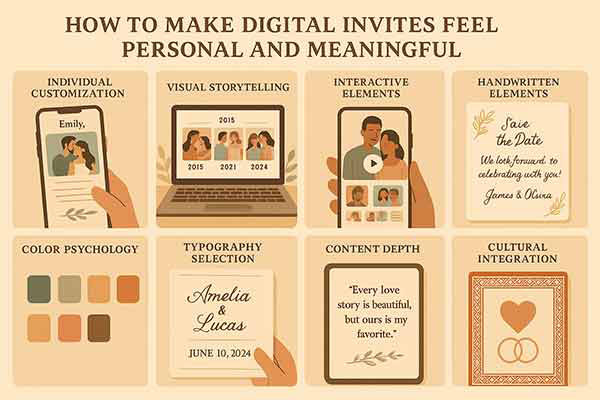
Creating emotional connection through digital invitations requires thoughtful design choices and personal touches that demonstrate care and investment in guest relationships.
Personalization Strategies
- Individual Customization: Address guests by name throughout the invitation, reference shared memories or relationships, and tailor messages to specific guest groups.
- Visual Storytelling: Include personal photos, couples’ journey timelines, or family memories that create emotional resonance with recipients.
- Interactive Elements: Incorporate elements that engage guests personally – photo galleries, personal video messages, or custom playlists that reflect relationships.
- Handwritten Elements: Combine digital efficiency with personal touches by including handwritten note images or signature elements.
Meaningful Design Choices
- Color Psychology: Choose colors that reflect personality, relationship history, or event significance rather than generic template options.
- Typography Selection: Select fonts that match personal style – elegant scripts for romantic events, modern sans-serifs for contemporary celebrations, or playful fonts for casual gatherings.
- Content Depth: Include stories, quotes, or personal messages that demonstrate thoughtfulness and investment in the celebration.
- Cultural Integration: Incorporate cultural elements, family traditions, or meaningful symbols that resonate with specific guest communities.
What Are the Best Practices for Each Invitation Format?
Maximizing success with either invitation format requires understanding and implementing format-specific best practices that optimize guest experience and event outcomes.
E-Invite Best Practices
Well-designed e-invites enhance guest engagement and streamline event coordination. Prioritizing clarity, accessibility, and functionality ensures a seamless digital invitation experience.
Design Optimization:
- Prioritize mobile-first design for smartphone viewing
- Use high-contrast colors for readability across devices
- Limit text quantity to essential information only
- Include clear call-to-action buttons for RSVP
Communication Strategy:
- Send preview emails to close friends for feedback
- Include a clear sender identification to avoid spam classification
- Provide multiple contact methods for questions or issues
- Send confirmation emails immediately after RSVP submission
Technical Considerations:
- Test across multiple email clients before mass sending
- Optimize file sizes for quick loading
- Include alt text for images for accessibility
- Provide plain text alternatives for email clients that don’t support HTML
Printed Invite Best Practices
Printed invitations bring a sense of tradition and elegance to any event. Paying attention to design details and mailing logistics ensures a polished, professional presentation.
Design Excellence:
- Choose paper weights and finishes appropriate to event formality
- Ensure adequate contrast for readability by all age groups
- Include all essential information clearly and legibly
- Maintain consistent branding across all invitation suite pieces
Logistics Management:
- Order 10-15% extra invitations for addressing errors or last-minute additions
- Use professional addressing services for formal events
- Include complete return address information
- Provide stamped return envelopes for RSVP convenience
Timeline Management:
- Allow extra time for proofing and revision cycles
- Plan for potential postal delays, especially during busy seasons
- Set RSVP deadlines, accounting for postal delivery time
- Prepare follow-up strategies for non-responders
People Also Ask
E-invites can be sent 4-6 weeks before most events, while printed invites should be sent 6-10 weeks in advance to account for design, printing, and postal delivery time.
For guests without email, consider phone calls, text messages, social media messaging, or ask mutual contacts to help facilitate communication.
Appropriateness varies by religious tradition and individual congregation preferences. Consult with religious leaders or ceremony coordinators for guidance.
Yes, digital invites can be saved as PDFs, screenshots, or printed copies. Many platforms offer high-resolution download options specifically for keepsake purposes.
E-invites have a significantly lower environmental impact, eliminating paper production, printing chemicals, and postal transportation while requiring only minimal server energy.
Conclusion: Making the Right Choice for Your Event
Choosing between e-invites vs printed invites depends on your event’s nature, guest preferences, budget, and values. Each format has its strengths. Digital options offer convenience and eco-friendliness, while printed invites provide a tactile, traditional touch. There’s no one-size-fits-all solution; the best choice aligns with your event goals and the experience you want to create.
Ultimately, your invitation reflects your planning style and how you value guest connection. Whether you go digital or traditional, focus on clarity, tone, and thoughtful presentation. Explore our customizable invitation templates for any event to find a design that fits your celebration perfectly.
Reference
- “Take Action: Reducing Paper Use.” Retrieved June 17, 2025, Yale Office of Sustainability. (2024).