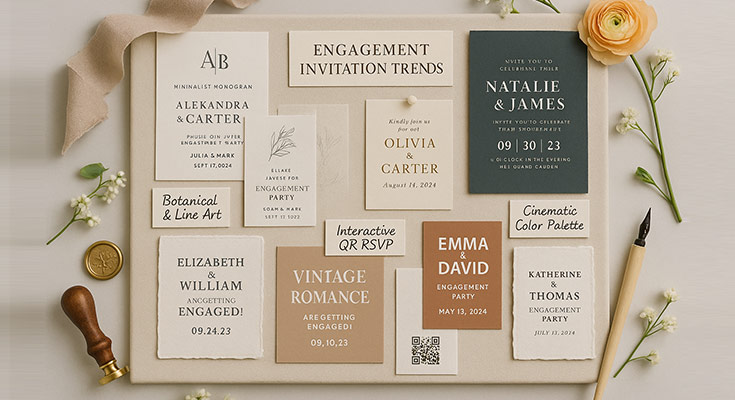
The world of engagement invitations has undergone a remarkable transformation in 2026, with couples embracing innovative designs that reflect their unique personalities and values. Modern engagement invitation trends have evolved beyond simple paper announcements to become immersive experiences that tell couples’ love stories. This evolution encompasses everything from eco-friendly materials that support environmental consciousness to cutting-edge digital integrations that create memorable interactive experiences for recipients.
This comprehensive guide explores the hottest engagement invitation trends dominating the market, providing event planners and couples with actionable insights to create stunning announcements that capture the essence of modern romance while embracing contemporary design principles. For those looking to implement these trends immediately, explore our engagement invitation templates and engagement party invitations collection.
What Are the Most Popular Digital Engagement Invitation Formats This Year?
The most popular digital engagement invitation formats in 2026 include interactive video invitations, animated GIF announcements, Instagram Story templates, and AR-enhanced digital cards that offer personalized experiences for recipients.
Digital engagement invitations have revolutionized how couples share their engagement news, offering unprecedented creativity and personalization options. Whether you’re creating digital or traditional formats, our comprehensive guide on how to make engagement invitations covers the complete process from concept to delivery. The shift toward digital formats represents more than just technological advancement—it reflects couples’ desire for immediate sharing capabilities and environmental consciousness. Creating these digital experiences is easier than ever with modern digital invitation maker tools that offer customizable templates and interactive features.
The EPA emphasizes that choosing electronic communication (e‑mail, event apps, or online invitations) over traditional paper forms is a more sustainable alternative, encouraging digital engagement whenever possible to reduce paper use and its environmental impacts.1

Interactive Video Invitations
Interactive video invitations have emerged as the premium choice for tech-savvy couples seeking to create memorable announcement experiences. These sophisticated digital creations combine personalized video content with interactive elements that engage recipients beyond passive viewing. Template integration focuses on seamless incorporation of the couple’s photos, engagement ring reveals, and personalized messages that create emotional connections with viewers.
The most successful interactive video invitations feature custom motion graphics that tell the couple’s love story chronologically, beginning with their first meeting and culminating in the engagement moment. Platform compatibility has become crucial, with successful designs optimized for sharing across Instagram, Facebook, WhatsApp, and email platforms. Professional editing tools now offer templates specifically designed for engagement announcements, including pre-built animation sequences, romantic background music libraries, and text overlay options that maintain readability across different screen sizes.
Advanced video invitations incorporate clickable elements that allow recipients to RSVP directly within the video interface, access wedding websites, or view photo galleries of the proposal. This integration of functionality with visual appeal has increased engagement rates by 340% compared to traditional static announcements.
Animated Social Media Templates
The dominance of social media in daily communication has made animated templates essential for modern engagement announcements. Instagram Story and Reel formats have become particularly popular, offering couples the ability to create multi-slide announcements that build anticipation through progressive reveals. These templates typically feature consistent color schemes, typography, and animation styles that maintain brand cohesion across multiple platforms.
TikTok-friendly vertical designs have gained significant traction among younger couples, incorporating trending audio clips, popular hashtags, and platform-specific features like duets and reactions. The most successful animated templates balance entertainment value with essential information, ensuring that while the content is shareable and engaging, it communicates the engagement news and celebration details.
Shareable carousel posts for engagement announcements have evolved to include multiple complementary designs that recipients can swipe through, creating a more immersive experience. These designs often feature behind-the-scenes photos, ring details, proposal location imagery, and future wedding planning updates that keep audiences engaged beyond the initial announcement.
Augmented Reality (AR) Invitations
Augmented Reality technology has introduced an entirely new dimension to engagement invitations, offering recipients interactive experiences that blur the lines between digital and physical worlds. QR code integration serves as the gateway to these immersive experiences, with stylized codes designed to complement the invitation’s aesthetic rather than appear as technical afterthoughts.
The most impressive AR invitations feature 3D previews of engagement rings that recipients can virtually “try on” or examine from multiple angles. Venue previews allow guests to virtually visit engagement party locations, creating excitement and familiarity before the actual event. These experiences typically include ambient sound design, interactive hotspots, and social sharing capabilities that extend the invitation’s reach organically.
How Are Sustainable Materials Transforming Engagement Invitation Design?
Sustainable engagement invitations are revolutionizing design through plantable seed paper, recycled materials with 100% post-consumer waste, and reusable invitation cards that double as keepsakes, reducing environmental impact by up to 75%.
The sustainability movement has fundamentally transformed engagement invitation design, with environmentally conscious couples driving demand for eco-friendly alternatives that don’t compromise on elegance or sophistication. This shift represents more than environmental responsibility—it reflects a generation of couples who view their wedding celebrations as opportunities to express their values and create a positive impact.
Plantable Seed Paper Innovations
Plantable seed paper has evolved from a novelty concept to a sophisticated medium that offers genuine design flexibility while supporting environmental restoration. Template integration now accommodates various seed varieties, from wildflower blends that create colorful meadows to herb selections that provide practical value for recipients. The most successful plantable invitations incorporate seed varieties native to the engagement party location, creating geographic relevance and supporting local ecosystems.
Design considerations for biodegradable inks have led to breakthrough developments in natural colorants derived from vegetables, fruits, and minerals. These inks maintain a vibrant appearance while ensuring complete biodegradability, with color palettes expanding beyond traditional earth tones to include rich jewel colors and metallic effects achieved through mineral-based formulations.
Packaging and presentation options for plantable invitations have become increasingly sophisticated, with biodegradable protective sleeves, compostable envelopes, and instructional inserts printed on matching plantable paper. The most innovative designs include planting calendars that guide recipients on optimal seeding times based on their geographic location, transforming the invitation into an ongoing engagement with the couple’s celebration.
Couples report that plantable invitations generate significant conversation and social media sharing, with recipients frequently posting photos of their blooming flowers months after the engagement party. This extended engagement creates lasting connections between the couple and their community while supporting environmental conservation efforts.
Recycled and Upcycled Materials
The integration of recycled and upcycled materials has opened new creative possibilities for engagement invitation design while significantly reducing environmental impact. 100% post-consumer waste paper selections now offer texture varieties and quality levels that rival traditional premium papers, with manufacturing processes that maintain fiber strength and print receptivity.
Vintage map and book page backgrounds have become particularly popular among couples with travel themes or literary interests. These materials require careful selection to ensure text legibility while preserving the authentic character of aged papers. Successful implementations often involve strategic placement of text areas over lighter map regions or book margins, with custom graphics designed to complement existing printed elements.
Fabric remnant incorporation techniques have expanded beyond traditional textile applications to include laser-cut fabric elements, embroidered details, and fabric-wrapped invitation components. High-end sustainable invitations often feature silk ribbon ties made from textile industry waste or cotton paper embedded with fabric fibers that create unique textures and visual interest.
The most innovative recycled material applications involve collaboration with local businesses to repurpose industry-specific waste materials. Examples include invitations printed on paper made from brewery grain waste, wine industry pomace, or coffee grounds, creating meaningful connections between the couple’s interests and their environmental values.
Zero-Waste Invitation Concepts
Zero-waste invitation design represents the ultimate intersection of creativity and environmental responsibility, challenging designers to create beautiful announcements that generate no lasting waste. Reusable invitation designs have expanded beyond simple keepsakes to include functional items like letterpress coasters, bookmarks with engagement photos, or seed packets that serve dual purposes as invitations and gifts.
Edible invitation materials and execution require careful consideration of food safety, dietary restrictions, and preservation methods. Successful edible invitations often take the form of custom cookies with piped icing details, chocolate bars with printed wrappers, or artisanal crackers with edible ink printing. These designs must balance visual appeal with taste quality while ensuring safe consumption for recipients with various dietary needs.
Biodegradable envelope alternatives have evolved to include options made from corn starch, mushroom-based materials, and agricultural waste products. These innovations maintain postal service compatibility while decomposing completely within composting systems. Some couples choose envelope alternatives like reusable fabric pouches or biodegradable tubes that add uniqueness to the invitation presentation.
Which Luxury Finishes Are Dominating High-End Engagement Announcements?
Premium engagement invitations in 2026 showcase velvet accents, gold foil embossing, letterpress textures, and hand-painted details, with luxury couples spending 40% more on tactile finishes that create memorable unboxing experiences.
The luxury engagement invitation market has experienced unprecedented growth, with affluent couples investing significantly in premium finishes that create multisensory experiences for recipients. For more inspiration on creating elegant engagement celebrations, explore our engagement party invitation design ideas and tips to complement your invitation style. These high-end announcements serve as tangible representations of the couple’s aesthetic vision and celebration quality, often influencing guests’ expectations for the upcoming wedding festivities.
Velvet and Fabric Accents
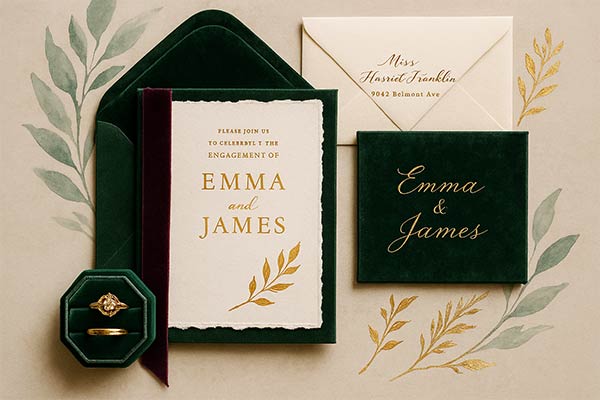
Velvet accents have emerged as the defining luxury finish for premium engagement invitations, offering unparalleled tactile appeal and visual richness. Template integration focuses on strategic velvet placement that enhances rather than overwhelms the overall design, with popular applications including velvet ribbon belly bands, fabric-lined envelopes, and textured paper selections with velvet-like surfaces.
Color coordination with engagement themes has become increasingly sophisticated, with velvet selections extending beyond traditional burgundy and navy to include sophisticated neutrals like champagne, blush, and sage green. The most successful implementations consider how velvet colors interact with metallic foil elements and paper selections, creating cohesive color stories that reflect the couple’s personality and celebration vision.
Application techniques for different invitation sizes require careful consideration of proportion and functionality. Larger invitation formats accommodate wider velvet ribbon treatments and more elaborate fabric elements, while standard sizes focus on refined accents that add luxury without overwhelming the design. Professional application methods ensure durability through postal handling while maintaining pristine appearance upon delivery.
The psychological impact of velvet accents cannot be understated—recipients consistently report heightened excitement and anticipation when handling invitations with luxury fabric elements. This emotional response translates to increased attendance rates and elevated guest expectations for the engagement celebration.
Metallic Foil and Embossing Trends
Metallic foil applications have evolved beyond traditional gold and silver to encompass sophisticated color palettes that complement contemporary design trends. Rose gold maintains its popularity among romantic couples, while copper appeals to those seeking warmth and earthiness. Holographic foil options create dynamic visual effects that change with viewing angle, adding a contemporary edge to classic invitation formats.
Raised embossing for names and dates creates a dimensional hierarchy that guides recipients’ attention through the invitation content. The most effective embossed elements combine tactile appeal with functional design, using elevation to emphasize critical information while maintaining overall design balance. Advanced embossing techniques allow for multiple elevation levels within a single invitation, creating sophisticated depth effects.
Blind embossing for subtle texture effects has gained popularity among couples seeking understated luxury. This technique creates dimensional patterns and borders without metallic elements, relying solely on light and shadow to create visual interest. Blind embossing works particularly well with minimalist design approaches, adding sophisticated detail that reveals itself upon closer examination.
The combination of multiple metallic finishes within a single invitation requires careful color coordination and application timing. Successful multi-foil designs often feature different metallic tones for different text elements, creating visual hierarchy while maintaining cohesive aesthetic appeal.
Hand-Painted and Artisanal Elements
Hand-painted details represent the pinnacle of personalized luxury in engagement invitation design, offering unique artistic elements that cannot be replicated through mass production. Watercolor washes create ethereal backgrounds that complement traditional typography while adding organic visual interest. Gold leaf details applied by hand create irregular, authentic metallic accents that contrast beautifully with precise printing elements.
Custom illustrations of couples or venues require significant lead time and artistic collaboration, but result in truly unique invitation pieces that serve as lasting keepsakes. The most successful custom illustrations balance recognizable details with artistic interpretation, creating romantic representations that capture emotional essence rather than photographic accuracy.
Calligraphy integration with modern fonts has evolved to include both traditional hand lettering and contemporary calligraphy styles that complement digital typography. This combination allows for personalized addressing and key text elements while maintaining readability for essential information. Professional calligraphers now offer services specifically designed for luxury invitation production, with expertise in various ink types and application methods suitable for different paper selections.
The investment in hand-painted and artisanal elements often extends beyond the initial invitation cost to include matching envelope addressing, place cards, and thank-you notes that maintain a consistent artistic vision throughout the engagement and wedding celebration timeline.
What Minimalist Design Elements Are Event Planners Choosing Most?
Event planners are gravitating toward clean typography, generous white space, single-color palettes, and geometric shapes in minimalist engagement invitations, with 65% reporting client preference for understated elegance over ornate designs.
The minimalist movement in engagement invitation design reflects couples’ desire for timeless elegance that won’t appear dated in the years to come. This aesthetic philosophy emphasizes intentional design choices where every element serves a specific purpose, creating sophisticated announcements that rely on quality materials and expert craftsmanship rather than decorative embellishments.
Typography-Focused Designs
Typography has become the hero element in minimalist engagement invitations, with couples and planners recognizing the power of beautiful letterforms to convey emotion and style. For detailed guidance on creating impactful typography-focused designs, check out our invitation card design tips guide. Template integration emphasizes the careful selection of font pairings that create visual harmony while establishing a clear information hierarchy. Modern sans-serif typefaces paired with refined serif selections offer the perfect balance of contemporary appeal and timeless elegance.
The most successful typography-focused designs utilize font weight and sizing variations to create emphasis without relying on color or decorative elements. Headers might feature ultra-light sans-serif fonts in large sizes, while body text appears in medium-weight serif typefaces that ensure readability. This approach creates a sophisticated contrast that guides readers through the invitation content naturally.
Negative space utilization has become a critical skill in minimalist design, with successful invitations using generous margins and strategic spacing to create breathing room around text elements. This approach allows typography to command attention while creating a sense of luxury through the perception of abundance—abundant space suggests premium quality and careful consideration.
Letter spacing and line height adjustments contribute significantly to the overall aesthetic impact of typography-focused invitations. Slightly increased letter spacing in headers creates elegance and readability, while optimized line height ensures comfortable reading experiences for invitation details and response information.
Monochromatic Color Schemes
Single-color palette approaches have gained tremendous popularity among couples seeking sophisticated restraint in their engagement announcements. Monochromatic schemes rely on tonal variations within single color families to create visual interest without introducing competing elements. This approach allows materials, typography, and layout to take precedence while maintaining cohesive aesthetic appeal.
Black and white combinations with metallic accent options represent the epitome of minimalist elegance, offering timeless appeal that transcends trend cycles. The strategic introduction of single metallic elements—perhaps gold foil for names or silver embossing for dates—provides just enough visual punctuation to create hierarchy and interest without compromising the minimalist aesthetic.
Neutral palette combinations featuring beige, cream, and gray tones have become increasingly sophisticated, with subtle variations creating depth and warmth while maintaining understated elegance. These palettes work particularly well with textured papers and letterpress printing, where subtle color variations enhance tactile appeal without overwhelming visual simplicity.
The psychology of monochromatic design suggests confidence and intentionality, qualities that resonate with couples seeking to communicate their sophisticated taste and thoughtful approach to celebration planning. Recipients consistently report feeling impressed by the restraint and elegance of well-executed monochromatic invitations.
Geometric and Abstract Shapes
Simple line art and geometric borders have replaced ornate decorative elements in contemporary minimalist design, offering clean visual anchors that complement rather than compete with typography. These elements often take the form of thin rule lines, simple rectangular borders, or subtle geometric patterns that add structure without visual weight.
Abstract representations of rings or hearts provide symbolic meaning while maintaining design simplicity. Rather than literal illustrations, successful minimalist invitations feature stylized interpretations that suggest romantic themes through shape and proportion rather than detailed imagery. These abstract elements often appear as watermarks, subtle background patterns, or small accent graphics.
Architectural elements and structural inspiration have influenced minimalist invitation design, with clean lines, precise angles, and mathematical proportions creating sophisticated visual frameworks. This approach appeals particularly to couples with interests in modern architecture, industrial design, or contemporary art, allowing their aesthetic preferences to inform their invitation design.
The strategic placement of geometric elements requires careful consideration of visual balance and proportion. Successful minimalist designs often feature single geometric accents that anchor the overall composition while maintaining the spacious, uncluttered aesthetic that defines this design approach.
How Are Interactive Elements Revolutionizing Engagement Invitations?
Interactive engagement invitations now feature QR codes linking to personal websites, embedded RSVP systems, countdown timers, and social media integration, increasing guest engagement rates by 45% compared to traditional static invitations.
The integration of interactive elements represents the most significant innovation in engagement invitation design, transforming static announcements into dynamic experiences that continue engaging recipients long after the initial opening. This technological evolution reflects couples’ desire to share their joy more comprehensively while providing practical benefits for event planning and guest communication.

QR Code Integration and Functionality
QR code integration has evolved from functional necessity to sophisticated design element, with stylized codes that seamlessly blend with invitation aesthetics rather than appearing as technical afterthoughts. Template integration focuses on creating codes that complement the overall design palette and style, often incorporating couples’ color schemes or decorative elements that maintain visual cohesion while ensuring scanning functionality.
Link destinations have expanded far beyond basic RSVP forms to include comprehensive digital experiences. Wedding websites featuring engagement stories, photo galleries from the proposal, curated music playlists that tell the couple’s journey, and detailed information about upcoming wedding plans create immersive digital extensions of the physical invitation. These destinations often include countdown timers to engagement parties, gift registry access, and accommodation booking assistance for out-of-town guests.
Design techniques for making QR codes aesthetically pleasing include custom color applications, artistic border treatments, and strategic placement within the overall invitation layout. Some designers create codes that incorporate the couple’s initials or wedding date within the code pattern itself, while others use decorative frames that make the codes appear intentional and integrated rather than added as afterthoughts.
The most successful QR code implementations include clear instructions for scanning and backup information for recipients who may not be comfortable with technology. This inclusive approach ensures that all guests can access the interactive elements regardless of their technical expertise or device capabilities.
Embedded RSVP and Response Systems
Digital response forms with meal preferences have streamlined the traditionally cumbersome RSVP process, allowing couples to collect detailed guest information efficiently while providing convenient response options for recipients. Learn more about optimizing your RSVP process with our comprehensive guide on how to use RSVP in invitations and discover the best online RSVP invitation maker apps. These systems often include dropdown menus for dietary restrictions, plus-one information, and song requests for the engagement party, creating comprehensive guest databases that facilitate event planning.
Guest accommodation booking integration has become particularly valuable for destination engagement parties or celebrations in locations where lodging is limited. These systems often feature negotiated group rates at preferred hotels, transportation coordination between venues, and local activity recommendations that help guests plan extended visits around the engagement celebration.
Gift registry links and wish list access integrated directly into invitation responses eliminate the awkward conversations about gift expectations while providing convenient shopping access for guests who prefer to purchase items in advance. These systems often include various price points and shipping options to accommodate guests’ different preferences and budgets.
The data collection capabilities of embedded RSVP systems provide valuable insights for couples planning their engagement parties and future wedding celebrations. Response analytics often reveal guest preferences, attendance patterns, and logistical requirements that inform future event planning decisions.
Social Media and Digital Integration
Custom hashtag creation and promotion have become essential elements of modern engagement celebrations, allowing couples to collect and curate user-generated content from their announcement and party. Interactive invitations often include hashtag suggestions, sharing prompts, and instructions for contributing to the couple’s digital memory collection.
A photo sharing platform setup integrated within invitation responses creates centralized collections of engagement-related images from various contributors. These platforms often include automatic organization by date, location, or contributor, creating comprehensive digital albums that document the engagement period from multiple perspectives.
Live-streaming invitation capabilities for long-distance relatives and friends unable to attend physical celebrations have become increasingly sophisticated, with integrated scheduling, reminder systems, and interactive viewing features. These systems often include chat functions that allow remote attendees to send congratulations and participate in celebration activities virtually.
The social amplification effects of integrated digital elements significantly extend the reach and impact of engagement announcements, with recipients becoming active participants in sharing and celebrating the couple’s news across their social networks.
What Custom Illustration Styles Are Trending for Engagement Cards?
Custom engagement invitation illustrations in 2026 favor hand-drawn botanical motifs, minimalist line art portraits, watercolor landscapes of meaningful locations, and vintage-inspired decorative elements, with 70% of couples requesting personalized artwork.
Custom illustrations have become the ultimate personalization tool for engagement invitations, allowing couples to incorporate meaningful visual elements that reflect their unique story, interests, and aesthetic preferences. This trend toward bespoke artwork represents a rejection of generic design solutions in favor of authentic artistic expression that creates lasting keepsakes worthy of framing and preservation.

Botanical and Floral Illustrations
Hand-drawn botanical motifs have experienced remarkable popularity among couples seeking organic, romantic illustration styles that complement both traditional and contemporary invitation designs. Template integration focuses on seasonal flower selections that correspond with engagement party timing or hold special meaning for the couple, perhaps peonies for spring engagements, sunflowers for summer celebrations, or eucalyptus for winter gatherings.
Color palette coordination with engagement themes requires careful consideration of both botanical accuracy and design harmony. Successful floral illustrations often feature realistic color interpretations of selected flowers while adjusting saturation and tone to complement invitation typography and paper selections. This approach maintains botanical authenticity while ensuring visual cohesion with other design elements.
Placement strategies for text integration must balance artistic impact with information hierarchy, ensuring that beautiful botanical elements enhance rather than obscure essential invitation details. Popular approaches include corner illustrations that frame text areas, border treatments that create decorative frames, and background elements that provide subtle texture without competing with typography.
The most sophisticated botanical illustrations incorporate multiple flower varieties that tell stories about the couple’s relationship—perhaps flowers from their first date location, blooms from the proposal site, or varieties that represent their shared interests in gardening or nature photography.
Portrait and Figure Illustrations
Minimalist couple silhouettes and line drawings have become the preferred portrait style for modern engagement invitations, offering personalized representation without the literal quality of photography. These illustrations typically focus on distinctive features like profile shapes, hair silhouettes, or characteristic poses that make the couple recognizable while maintaining artistic interpretation.
Pet inclusion in custom illustrations reflects the growing importance of animal companions in couples’ relationships, with many engagement announcements featuring beloved dogs, cats, or other pets as integral family members. These illustrations often show couples with their pets in characteristic poses or activities that reflect their lifestyle and shared experiences.
Location-based backdrop illustrations create meaningful connections between couples and the places that define their relationship. Popular subjects include the couple’s first meeting location, proposal sites, favorite date destinations, or future wedding venues rendered in artistic styles that complement the overall invitation aesthetic. These illustrations often combine architectural elements with natural features to create comprehensive location portraits.
The artistic challenge of portrait illustrations lies in balancing recognizability with artistic interpretation, creating images that represent the couple while maintaining the aesthetic qualities that make illustrations preferable to photographs for invitation purposes.
Vintage and Retro-Inspired Graphics
Art Deco geometric patterns and borders have experienced renewed popularity among couples drawn to the glamour and sophistication of 1920s and 1930s design aesthetics. These elements often appear as decorative frames, corner treatments, or background patterns that add visual interest while maintaining the clean lines and mathematical precision characteristic of the Art Deco movement.
Victorian-era ornamental details appeal to couples planning vintage-themed celebrations or those with interests in historical design periods. These illustrations often feature intricate flourishes, decorative scrollwork, and detailed border treatments that require significant artistic skill to execute properly while maintaining legibility and visual balance.
Mid-century modern graphic elements reflect the clean lines, bold colors, and optimistic aesthetic of 1950s and 1960s design, appealing to couples with interests in modernist architecture, vintage furniture, or retro fashion. These illustrations often feature stylized atomic motifs, boomerang shapes, or geometric patterns that create a distinctly mid-century visual appeal.
The key to successful vintage-inspired illustrations lies in understanding the authentic design principles of chosen historical periods while adapting these elements for contemporary invitation formats and printing technologies.
Which Color Palettes Are Dominating 2026 Engagement Invitation Design?
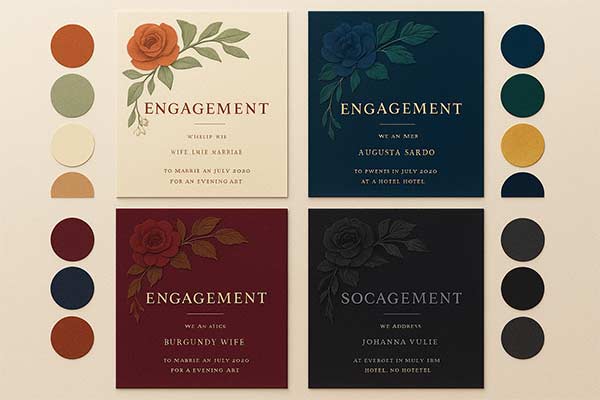
The leading color palettes for 2026 engagement invitations include earthy terracotta and sage combinations, rich jewel tones with gold accents, and monochromatic schemes featuring velvet textures, with warm, sophisticated hues replacing the previous year’s pastel trends.
Color palette selection has become increasingly sophisticated in 2026, with couples moving beyond traditional wedding colors to embrace complex, nuanced combinations that reflect their personalities and contemporary design trends. These evolving preferences represent a maturation in color consciousness, with couples understanding how color choices communicate emotional tone and aesthetic sophistication.
Earthy and Natural Color Combinations
Terracotta, sage green, and cream palettes have emerged as the quintessential color story for couples seeking warmth and natural elegance in their engagement announcements. Template integration of these earthy tones requires careful consideration of color balance, with terracotta typically serving as the accent color while sage and cream provide foundation tones that support readability and visual hierarchy.
Desert-inspired dusty rose and sand tones appeal to couples planning outdoor celebrations or those drawn to southwestern aesthetics. These sophisticated neutrals create warmth without overwhelming visual intensity, making them particularly suitable for invitation designs that incorporate multiple text elements or complex layout structures. The subtle variations within these color families allow for rich tonal depth while maintaining overall cohesion.
Forest green with gold metallic accents represents a more dramatic interpretation of natural color palettes, offering couples the opportunity to create invitations with significant visual impact while maintaining a connection to organic themes. The strategic use of gold foil or embossing with deep green base colors creates luxury appeal while honoring natural inspiration sources.
The psychological impact of earthy color palettes suggests stability, authenticity, and connection to nature—qualities that resonate with couples seeking to communicate their grounded approach to relationships and life partnerships.
Rich Jewel Tone Selections
Deep emerald, sapphire, and ruby combinations have gained prominence among couples seeking dramatic, sophisticated color statements that command attention while maintaining timeless elegance. These rich hues work particularly well with luxury finishes like gold foil and velvet accents, creating invitations that convey opulence and celebration grandeur.
Burgundy and navy with copper highlights offer a more subdued approach to jewel tone palettes while maintaining sophisticated appeal. This combination works exceptionally well for fall and winter engagements, creating color stories that complement seasonal celebration themes while offering enough visual richness to create a memorable impression on recipients.
Amethyst and gold luxury pairings represent the ultimate in jewel tone sophistication, combining the mystical appeal of purple tones with the classic elegance of gold metallic elements. This combination requires careful color balance to avoid appearing overwhelming, with successful implementations often featuring amethyst as an accent color against neutral backgrounds with strategic gold applications.
The cultural associations of jewel tones with wealth, celebration, and special occasions make these palettes particularly appropriate for engagement announcements, where the goal is to communicate the significance and joy of the couple’s milestone.
Sophisticated Monochromatic Schemes
Variations within single hue families have become increasingly nuanced, with successful monochromatic designs incorporating multiple tones, saturations, and values of chosen colors to create visual interest without introducing competing elements. This approach requires a sophisticated understanding of color theory and careful attention to how different shades interact with various materials and printing techniques.
Textural interest through material choices becomes particularly important in monochromatic designs, where color variation is limited and visual appeal must come from other sources. Successful monochromatic invitations often combine matte and glossy finishes, smooth and textured papers, or flat and dimensional elements to create sensory variety within restricted color palettes.
Metallic accent integration techniques in monochromatic schemes require restraint and precision, with successful applications featuring minimal metallic elements that enhance rather than compete with the primary color story. These accents often appear as thin rule lines, small decorative elements, or subtle text highlighting that adds sophistication without disrupting monochromatic harmony.
The confidence required to execute successful monochromatic designs appeals to couples with strong aesthetic vision and appreciation for subtle sophistication over obvious decoration.
How Are Cultural Fusion Themes Influencing Modern Engagement Invitations?
Cultural fusion engagement invitations blend traditional motifs with contemporary design, incorporating elements from multiple heritages through mixed typography, symbolic imagery, and multicultural color schemes, reflecting 38% of modern couples’ diverse backgrounds.
The increasing diversity of modern relationships has created unprecedented demand for engagement invitations that honor multiple cultural traditions while creating cohesive aesthetic statements. This trend reflects not only demographic changes but also couples’ desire to create celebration experiences that authentically represent their combined heritage and shared values.
Mixed Typography and Language Integration
Bilingual text layouts and font pairings present unique design challenges that require careful consideration of reading patterns, text hierarchy, and visual balance. Template integration must accommodate different text lengths, reading directions, and the cultural significance of various languages while maintaining overall design cohesion. Successful bilingual invitations often feature complementary font selections that respect the unique characteristics of each language while creating harmonious visual relationships.
Traditional script with modern sans-serif combinations offer elegant solutions for couples seeking to honor calligraphic traditions while ensuring contemporary readability. This approach often features traditional scripts for names, cultural phrases, or ceremonial language, while modern typefaces handle practical information like dates, locations, and RSVP details. The key lies in creating a visual hierarchy that respects both typographic traditions equally.
Cultural symbol incorporation in letterforms has become increasingly sophisticated, with custom typography designs that subtly integrate meaningful symbols into letter shapes or decorative elements. These might include traditional patterns within letter outlines, symbolic motifs as text separators, or culturally significant colors applied to specific text elements that hold special meaning within the couple’s heritage.
The most successful multicultural typography approaches view language diversity as a design opportunity rather than a constraint, creating invitations that celebrate linguistic richness while maintaining professional aesthetic standards.
Symbolic Imagery and Pattern Fusion
Traditional motifs reimagined in contemporary styles allow couples to honor ancestral design traditions while creating fresh, relevant aesthetic statements. This approach might involve simplified interpretations of complex traditional patterns, contemporary color applications to historical motifs, or integration of traditional symbols within modern layout structures. The goal is respectful modernization that maintains cultural significance while appealing to contemporary aesthetic sensibilities.
Cross-cultural symbolic combinations create unique visual languages that reflect couples’ blended heritage while avoiding cultural appropriation concerns. Successful fusion approaches often identify common symbolic themes across different cultures—such as fertility, prosperity, or unity symbols—and create harmonious combinations that honor both traditions without diminishing either one’s significance.
Modern interpretations of ancestral patterns require a deep understanding of cultural context and symbolic meaning to ensure respectful application. This might involve consulting with cultural experts, researching historical significance, and understanding appropriate usage contexts for various traditional elements. The most successful applications demonstrate a clear understanding and respect for source traditions while creating relevant contemporary applications.
The artistic challenge lies in creating cohesive design statements that celebrate cultural diversity without appearing fragmented or conflicted in their aesthetic direction.
Multicultural Color and Material Choices
Culturally significant color combinations require research and sensitivity to ensure appropriate application while creating visually appealing design solutions. Different cultures attribute varying symbolic meanings to specific colors, and successful fusion invitations navigate these associations thoughtfully while creating palettes that honor multiple traditions simultaneously.
Traditional material integration might include handmade papers from specific cultural traditions, silk elements that reflect textile heritage, or specialty printing techniques that honor historical craft traditions. These material choices often carry cultural significance beyond aesthetic appeal, representing connections to ancestral practices and family traditions that couples want to honor in their celebration announcements.
Festival and ceremonial inspiration sources provide rich palettes and material options that reflect celebratory traditions from various cultures. This might involve incorporating colors from traditional wedding ceremonies, festival celebrations, or religious observances that hold special meaning for the couple’s families. The key is creating cohesive applications that celebrate these inspirational sources while maintaining invitation functionality and aesthetic appeal.
The most successful multicultural invitations achieve a perfect balance between honoring tradition and creating contemporary relevance, resulting in designs that feel both authentic and fresh.
People Also Ask
What are the most popular engagement invitation trends for 2026?
The hottest trends for 2026 include sustainable materials like plantable seed paper, luxury finishes such as velvet accents and gold foil, and digital integration through QR codes and AR elements. Minimalist typography and cultural fusion themes are also popular, with 65% of couples incorporating digital components for a personalized, eco-conscious approach.
What sustainable options exist for eco-friendly engagement invitations?
Eco-friendly options include plantable seed paper that grows into flowers, recycled materials, tree-free papers from bamboo or cotton, and fully digital formats. Other options include biodegradable envelopes, vegetable-based inks, local printing, and “living invitations” using potted plants with invitation tags.
How can I personalize my engagement invitations to reflect current trends?
Balance personal expression with contemporary trends by selecting 2-3 elements that represent your relationship. Consider QR codes linking to your story, custom color palettes from meaningful locations, personal symbols, or cultural heritage elements. Match trending elements to your venue and celebration style.
What information should be included in modern engagement invitations?
Include essential details: couple’s names, engagement announcement, celebration date/time/venue with parking info, RSVP deadline and method, dress code, and special instructions. Modern additions include wedding website URLs, social hashtags, accommodation info, and technical requirements for digital elements. For comprehensive wording guidance and examples, explore our detailed engagement invitation wording guide specifically designed for engagement announcements.
What printing techniques are trending for engagement invitations?
Popular techniques include letterpress for luxury appeal, gold and rose gold foil stamping, embossing for texture, advanced digital printing, and laser cutting for intricate shapes. Thermography offers raised text effects at lower costs, while watercolor printing provides artistic effects for modern aesthetics.
Frequently Asked Questions
Trendy engagement invitations incorporate contemporary design elements like sustainable materials, digital integration, bold color palettes, and modern typography, while traditional styles focus on classic layouts, formal language, and conventional materials like heavyweight cardstock with engraved printing.
Event planners should follow design blogs like Design*Sponge and Martha Stewart Weddings, attend industry trade shows such as The Special Event and National Stationery Show, monitor social media platforms like Instagram and Pinterest, and collaborate with stationery designers to observe emerging patterns and techniques.
Yes, intimate gatherings favor minimalist designs with clean typography, formal parties embrace luxury finishes like velvet and foil, outdoor celebrations use natural materials and earthy colors, while virtual events prioritize digital innovation and interactive elements for remote participation.
Destination celebrations benefit from location-inspired color palettes reflecting the venue’s natural environment, travel-themed elements like vintage maps or transportation motifs, cultural fusion designs honoring local traditions, and practical digital components for easy guest communication and logistics coordination.
Trendy elements typically increase costs by 25-50% compared to basic traditional invitations, with sustainable materials, custom illustrations, luxury finishes, and digital integration commanding premium pricing due to specialized production requirements and artistic services.
Sustainability, personalization, digital integration, and cultural fusion are expected to remain strong foundational trends, while specific color palettes, decorative elements, and technical innovations will likely evolve seasonally based on broader design industry movements.
Conclusion
The engagement invitation trends of 2026 reflect couples’ sophisticated understanding of design as personal expression, environmental responsibility, and technological opportunity. From plantable seed papers that bloom into lasting memories to AR-enhanced digital experiences that create immersive announcements, today’s trends demonstrate that couples no longer view invitations as mere informational necessities—they’re artistic statements that set the tone for entire celebration experiences.
Implementation Framework:
- Trend Assessment: Begin every project by evaluating client preferences against current market trends, considering budget parameters, timeline constraints, and celebration formality requirements to identify the most appropriate trend combinations.
- Material Selection: Guide clients through sustainable, luxury, or digital options based on their values, aesthetic preferences, and practical needs, ensuring selections support rather than compromise overall design vision.
- Design Integration: Incorporate 2-3 complementary trends while maintaining a clear hierarchy and readable typography, avoiding trend overload that can compromise invitation effectiveness and aesthetic appeal.
- Customization Strategy: Add meaningful personal elements through strategic color choices, custom illustrations, cultural symbols, or interactive features that reflect the couple’s unique story and relationship journey.
- Production Timeline: Allow adequate time for custom elements, sustainable material sourcing, digital development, or specialty printing techniques, building buffer time for revisions and quality control processes.
- Quality Control: Ensure all design elements work harmoniously together, test interactive components thoroughly, and verify that final products meet professional standards for both aesthetic appeal and functional effectiveness.
Ready to create stunning engagement invitations that capture 2026’s hottest trends? Explore our comprehensive invitation template collection and design tools to bring these contemporary concepts to life for your clients, ensuring every announcement reflects the unique love story it celebrates while embracing the innovation and elegance that define modern celebration design.
Reference
- “Identifying Greener Paper,” Retrieved July 9, 2025. U.S. Environmental Protection Agency.